 The oil and gas business operates in an environment that is characterized by challenging conditions and requires equipment dependability, safety, and efficiency. Reciprocating compressors require high quality valves to regulate the flow of gas during the process of compression.
At Airpack Compressor Teknologies Pvt. Ltd., we manufacture precision-engineered compressor valves for oil and gas applications, designed to perform under high pressure, high temperature, and continuous-duty environments. Our valve solutions are suitable for upstream, midstream, and downstream operations where consistent compressor performance is critical.
Why Compressor Valves Are Important in Oil & Gas Operations.
Reciprocating compressors are widely used across oil refineries, natural gas processing plants, petrochemical facilities, LNG terminals, and pipeline transportation systems. The valve assembly is one of the most critical components affecting compressor efficiency.
A properly designed valve helps:
Improve Compressor Efficiency
Efficient gas flow management reduces pressure losses and improves overall compressor performance.
Reduce Energy Consumption
Optimized valve operation lowers power requirements and contributes to operational cost savings.
Enhance Equipment Reliability
Durable valve components reduce wear and extend maintenance intervals.
Minimize Downtime
High-performance valves decrease the risk of unexpected failures and production interruptions.
Applications of Compressor Valves in the Oil & Gas Sector
Compressor valves are used in a wide range of industrial gas handling processes.
Natural Gas Compression
Valves ensure efficient suction and discharge cycles during gas transportation and processing operations.
Refinery Operations
Oil refineries rely on reciprocating compressors for various process gases, making valve reliability essential for uninterrupted production.
Petrochemical Plants
Compressor valves support critical gas compression systems used in chemical manufacturing and processing.
LNG and Gas Storage Facilities
High-performance valves help maintain consistent compressor operation in liquefied natural gas applications.
Pipeline Transmission Systems
Gas transmission networks require dependable compressor components capable of operating continuously under varying pressure conditions.
Features of High-Performance Compressor Valves
Modern industrial compressors demand components capable of handling challenging operating environments.
Precision Engineered Design
Accurate manufacturing ensures proper seating, reduced leakage, and improved volumetric efficiency.
Durable Construction Materials
Valve components are manufactured using advanced thermoplastics, metallic materials, and wear-resistant alloys suitable for industrial gas applications.
High Pressure Capability
Designed to withstand demanding pressure cycles without compromising performance.
Corrosion Resistance
Materials selected for enhanced resistance against aggressive gases and harsh operating conditions.
Long Service Life
Robust construction helps reduce maintenance requirements and replacement frequency.
Types of Compressor Valves Used in Oil & Gas Applications.
Different operating conditions require specific valve designs.
Suction Valves
Allow gas to enter the compressor cylinder during the intake cycle.
Discharge Valves
Control the release of compressed gas during the compression cycle.
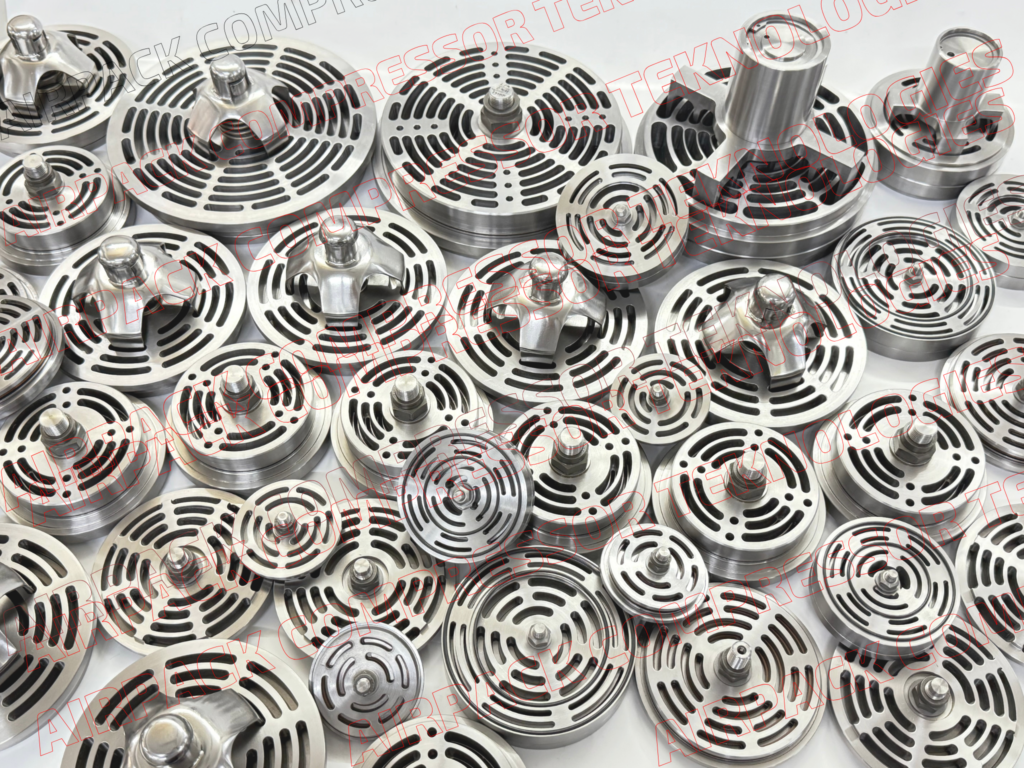
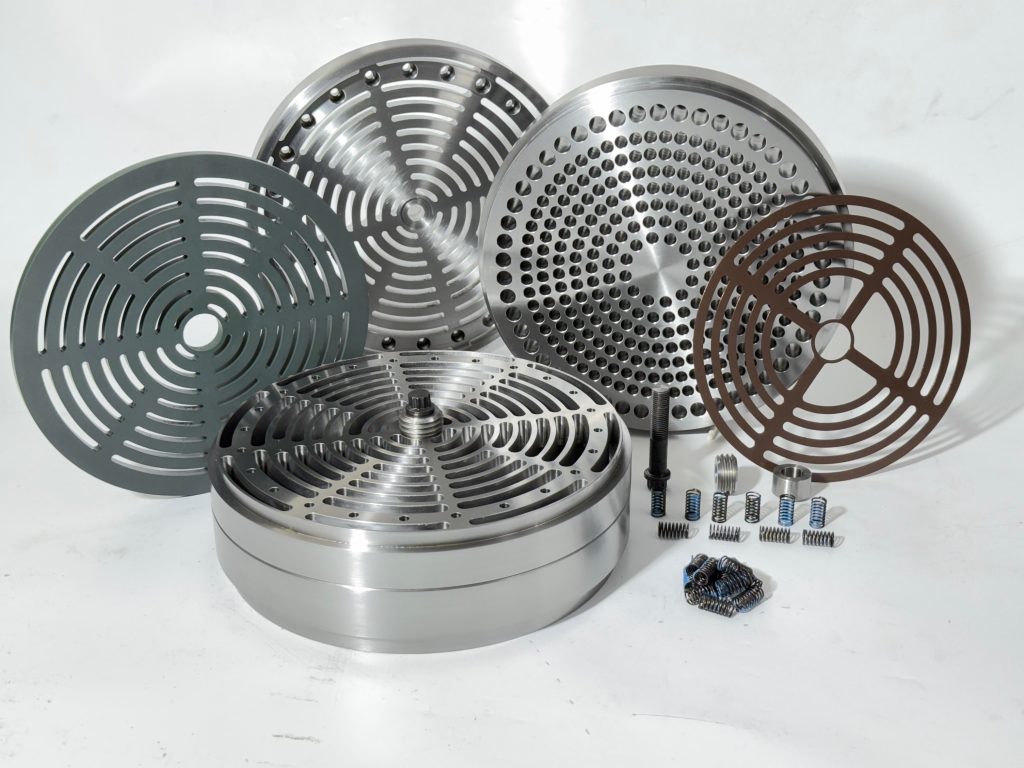
Plate Valves
Commonly used for high-speed reciprocating compressors due to their efficient flow characteristics.
Ring Valves
Suitable for heavy-duty industrial applications where durability is a priority.
Poppet Valves
Often selected for specific gas compositions and operating requirements.
Common Causes of Compressor Valve Failure
Understanding potential failure mechanisms helps improve equipment reliability.
Excessive Wear
Continuous operation can gradually wear valve components and reduce efficiency.
Contamination
Foreign particles may damage sealing surfaces and affect valve performance.
Improper Operating Conditions
Pressure fluctuations and excessive temperatures can shorten valve life.
Material Fatigue
Repeated opening and closing cycles can lead to component fatigue over time.
Inadequate Maintenance
Delayed inspections may allow minor issues to develop into significant failures
How Airpack Supports Oil & Gas Industry Requirements.
Airpack Compressor Teknologies Pvt. Ltd. specializes in manufacturing reciprocating compressor spare parts and valve solutions for industrial applications.
Our capabilities include:
Custom Manufacturing
Valve assemblies developed according to compressor specifications and operational requirements.
Quality-Controlled Production
Every component undergoes rigorous inspection procedures to ensure dimensional accuracy and reliability.
Industry-Focused Expertise
Experience serving industries that require dependable compressor performance and long-term operational reliability.
Replacement and Aftermarket Solutions
Compressor valves designed for compatibility with various reciprocating compressor models.
Benefits of Choosing Quality Compressor Valves
Selecting high-quality compressor valves provides measurable operational advantages.
Improved Gas Flow Efficiency
Optimized valve design contributes to better compressor performance.
Lower Maintenance Costs
Durable components reduce the frequency of repairs and replacements.
Increased Equipment Availability
Reliable valves help maintain uninterrupted production.
Enhanced Operational Safety
Proper valve function supports safe compressor operation in demanding environments.
What makes Airpack Compressor Teknologies Pvt. Ltd. the best choice?
Airpack has always been devoted to supplying dependable compressor valves for use in industries. By utilizing our production experience and standards, we enable customers to get better reliability of compressors.
No matter if you have a process that uses natural gas, refinement operations, petrochemicals manufacturing, or gas transport systems, our compressor valves will work efficiently.
Conclusion
Valves in compressors play a very vital role in the process of oil and gas compression. Their efficiency affects factors such as efficiency, reliability, and maintenance cost of the compressors. Good valve assemblies can help one achieve better compressor performance with minimal downtime and loss of energy. Airpack Compressor Teknologies Pvt. Ltd. provides high-quality engineered valves for compressors.
Frequently Asked Questions (FAQs)
What is the function of a compressor valve in the oil and gas industry?
A compressor valve controls the flow of gas into and out of a reciprocating compressor cylinder, enabling efficient compression and reliable operation.
Which industries use compressor valves?
Compressor valves are commonly used in oil refineries, natural gas processing plants, petrochemical facilities, LNG terminals, and pipeline transmission systems.
How often should compressor valves be inspected?
Inspection frequency depends on operating conditions, compressor type, and maintenance schedules. Regular inspections help prevent unexpected failures.
What are the signs of compressor valve problems?
Common indicators include reduced compressor efficiency, increased power consumption, unusual vibration, pressure fluctuations, and abnormal operating temperatures.
Can compressor valves be customized?
Yes. Compressor valves can be manufactured according to compressor specifications, operating conditions, gas composition, and performance requirements.
What materials are used in compressor valves?
Depending on the application, compressor valves may utilize thermoplastic materials, metallic valve plates, engineered polymers, and wear-resistant alloys.