 Reciprocating compressors play an important role in industries where compressed air or gas is required for daily operations. From manufacturing plants and chemical processing facilities to oil and gas industries, these machines help maintain reliable and efficient production.
But have you ever wondered how a reciprocating compressor draws gas into its cylinder and then pushes it out at a higher pressure? One of the most important components responsible for this process is the reciprocating compressor valve.
Understanding how a reciprocating compressor valve works can help plant operators, maintenance engineers, and industrial buyers make better decisions about compressor performance, maintenance, and replacement parts.
The working principle of reciprocating compressor valves, the roles of suction and discharge valves, the components of a valve assembly, common valve problems, and practical maintenance considerations.
What Is a Reciprocating Compressor Valve?
A reciprocating compressor valve is a pressure-operated component that controls the movement of gas into and out of a compressor cylinder.
Unlike a conventional manually operated valve, an automatic reciprocating compressor valve generally opens and closes in response to the pressure difference across the valve. Its movement is coordinated with the compression cycle rather than being controlled by a separate actuator.
A typical reciprocating compressor uses two main types of valves:
-
- Suction valve: Allows gas to enter the compressor cylinder.
- Discharge valve: Allows compressed gas to leave the cylinder and enter the discharge system.
The combined action of these valves ensure that the gas flow is in the right direction for each compression cycle.
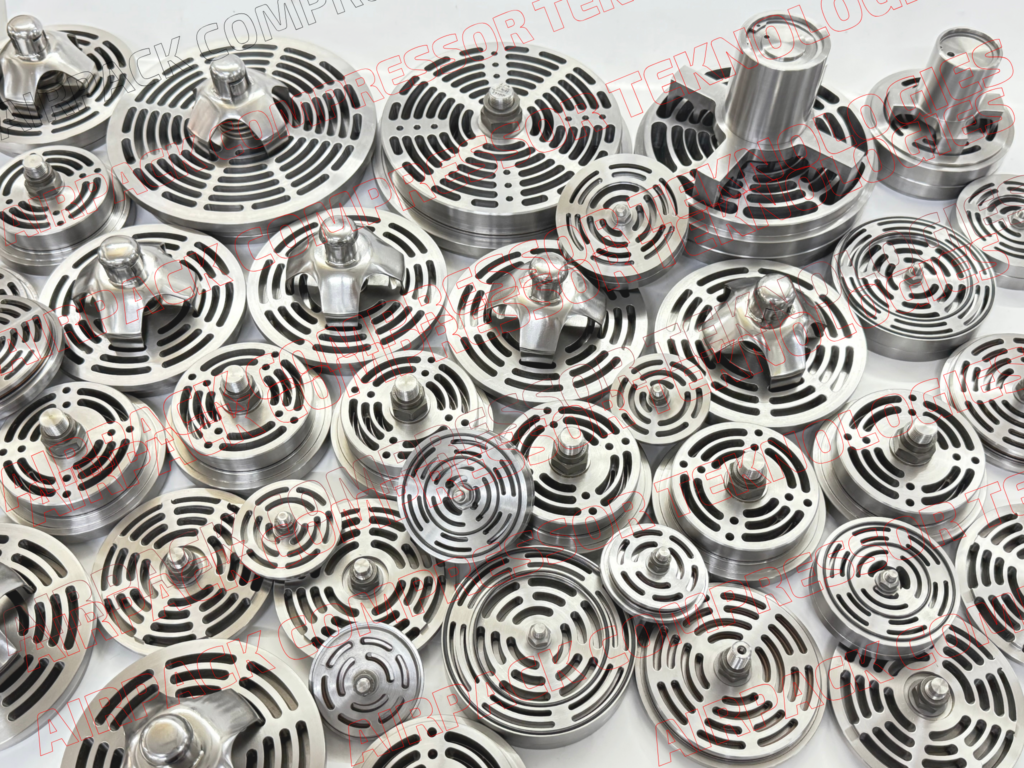
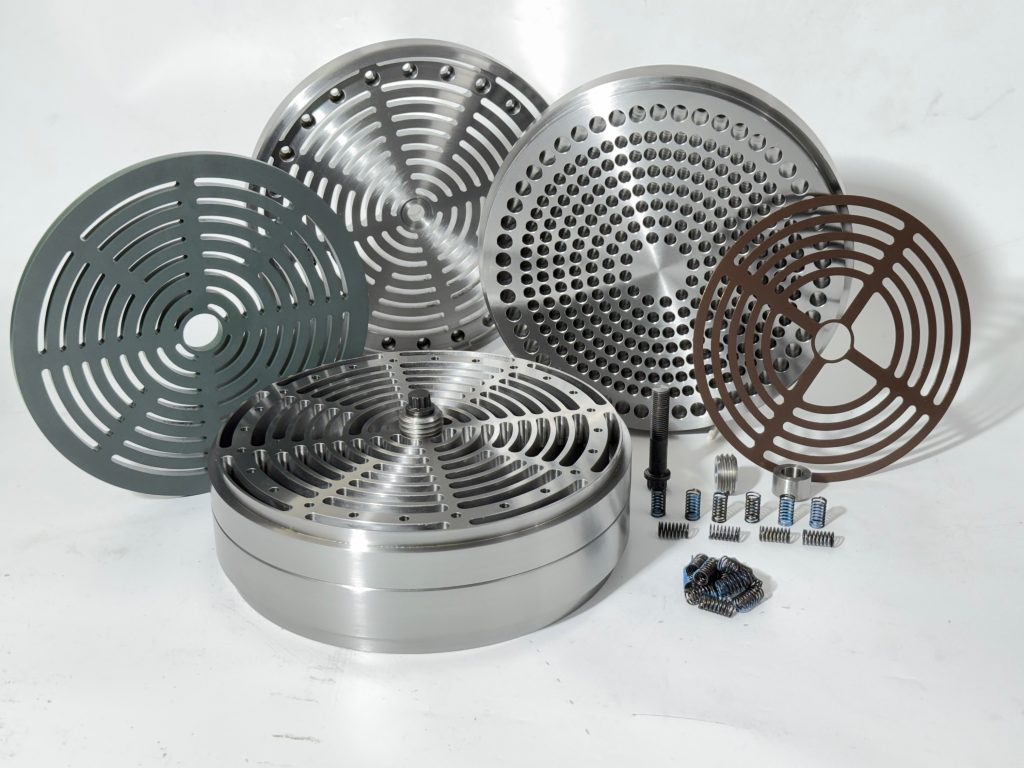
The way the compressor works depends on the design of the valve assembly, including its valve plates, springs, seats, and other parts.
In industrial applications, the choice of the right valve design and material is important, as valve performance can be affected by operating pressure, temperature, gas composition and compressor speed.
How Does a Reciprocating Compressor Valve Work?
Reciprocating compressor valve works, it helps to look at the movement of the compressor piston.
A reciprocating compressor uses a piston that moves back and forth inside a cylinder. This movement changes the volume and pressure of the gas inside the cylinder.
During this process, the suction and discharge valves open and close automatically in response to pressure differences.
Let’s break down the process into four simple stages.
1. Suction Stroke: Gas Enters the Cylinder.
During the suction stroke, the piston moves away from the cylinder head. This increases the volume inside the cylinder and reduces the pressure of the gas trapped within it.
When the cylinder pressure falls below the suction pressure, the pressure difference causes the suction valve to open. Gas then flows from the suction line into the cylinder.
The discharge valve remains closed because the cylinder pressure is lower than the pressure on the discharge side.
The amount of gas entering the cylinder depends on factors such as the available pressure difference, valve flow area, cylinder design, and operating conditions.
2. Compression Stroke: Gas Pressure Increases.
As the piston reverses direction and moves toward the cylinder head, the volume inside the cylinder decreases.
The gas trapped inside the cylinder becomes compressed, causing its pressure and temperature to increase.
As the cylinder pressure rises above the suction pressure, the suction valve closes. This prevents the compressed gas from flowing back into the suction line.
Both valves may remain closed during part of the compression process, allowing the gas pressure to build.
The quality of the valve seal is particularly important at this stage. Poor sealing can allow gas to leak backward, reducing compression efficiency.
3. Discharge Stroke: Compressed Gas Leaves the Cylinder
When the pressure inside the cylinder becomes greater than the discharge pressure, the discharge valve opens.
The compressed gas flows through the discharge valve and into the discharge line or downstream system.
During this stage, the suction valve remains closed to prevent reverse gas flow.
The discharge valve must respond quickly and seal effectively throughout the cycle. Delayed opening, excessive pressure loss, or leakage can increase energy consumption and affect compressor capacity.
4. The Cycle Repeats
As the piston reaches the end of its travel and begins moving away from the cylinder head again, the cylinder volume increases.
The pressure inside the cylinder falls, the discharge valve closes, and the suction valve opens when the appropriate pressure difference is reached.
The entire process then repeats continuously while the compressor operates.
Although each individual movement happens quickly, the valves must respond reliably to repeated pressure changes over thousands or even millions of operating cycles.
This is why valve design, material selection, manufacturing quality, and regular inspection are essential for dependable compressor performance.
What Are the Main Components of a Reciprocating Compressor Valve?
A reciprocating compressor valve assembly contains several components that work together to control gas flow.
The exact design varies according to the compressor manufacturer, valve type, pressure rating, and application.
1. Valve Seat
The valve seat provides the sealing surface against which the moving valve element closes.
A properly manufactured and maintained seat helps minimize leakage when the valve is closed.
Damage, erosion, or wear on the seating surface can prevent effective sealing.
2. Valve Plate or Moving Element
The valve plate or another moving element controls the opening and closing of the gas passage.
Depending on the valve design, the moving element may be a plate, ring, strip, or another specialized component.
Its weight, stiffness, geometry, and travel influence the valve’s response and performance.
3. Springs
Some valve designs use springs to help control the movement of the valve element and return it toward the closed position.
Spring characteristics must be suitable for the specific valve design and operating conditions.
Damaged, weakened, or incorrectly specified springs can affect valve response and reliability.
4. Valve Guard or Lift Limiter
A valve guard or lift limiter helps control the movement of the valve element and may limit its maximum lift.
Correct movement is important because excessive lift or impact can contribute to wear and fatigue, while insufficient lift may restrict gas flow.
The exact arrangement depends on the valve design.
5. Valve Assembly Housing and Retaining Components
The housing, retainers, fasteners, and associated components hold the valve assembly together and maintain the intended arrangement of its internal parts.
These components must be compatible with the compressor design and installed according to the applicable service instructions.
6. Sealing Components
Depending on the construction, a valve assembly may incorporate sealing elements or other features designed to minimize unwanted gas leakage.
The materials used must be appropriate for the gas being compressed, operating temperature, pressure, and other service conditions.
What Types of Reciprocating Compressor Valves Are Commonly Used?
Reciprocating compressor valves are available in different designs to suit specific operating requirements.
The appropriate type depends on factors such as compressor speed, pressure ratio, gas properties, capacity requirements, and maintenance considerations.
1. Plate Valves
Plate valves use thin, moving plate elements to open and close gas passages.
They are used in various reciprocating compressor applications. Their performance depends on plate geometry, material properties, lift, and the design of the surrounding components.
2. Ring Valves
Ring valves use ring-shaped moving elements to control the flow of gas.
Their design can provide multiple flow passages and is used in certain industrial compressor applications.
The number, dimensions, and arrangement of the rings depend on the valve design.
3. Poppet Valves
Poppet valves use a moving element that lifts away from a seat to allow gas flow.
Depending on the compressor design, these valves may be used where their flow characteristics and mechanical construction suit the application.
4. Concentric or Specialised Valve Designs
Some compressors use concentric or other specialised valve arrangements designed around specific flow, space, pressure, or operating requirements.
The correct choice should be based on the compressor manufacturer’s specifications and the actual operating conditions rather than the valve type alone.
Why Is Reciprocating Compressor Valve Performance Important?
A compressor valve may be a relatively small component, but its condition can significantly influence the operation of the machine.
Compressor Efficiency
Valves control the movement of gas during each compression cycle.
Restricted flow, excessive pressure drop, or leakage can reduce volumetric efficiency and increase the energy required to deliver the required gas flow.
Operating Temperature
Gas compression naturally increases temperature.
However, leaking valves, excessive pressure losses, and other operating problems can contribute to abnormal heating. Discharge valve leakage may also expose parts of the system to repeated heating from hot gas flowing in the wrong direction.
Compressor Capacity
When valves do not open fully or seal properly, the amount of gas delivered by the compressor can decrease.
This may cause the compressor to run longer or struggle to meet the demands of the connected equipment.
Maintenance Costs and Downtime
Valve problems can lead to additional inspections, replacement work, and unplanned maintenance.
Choosing suitable components and identifying early signs of wear can help reduce avoidable downtime.
Equipment Reliability
A correctly selected and maintained valve assembly helps the compressor operate as intended.
For continuous industrial operations, consistent valve performance supports more predictable maintenance planning and equipment availability.
What Causes Reciprocating Compressor Valve Failure?
Valve failure can occur for several reasons. Understanding the underlying cause is important because replacing a damaged component without addressing the original problem may lead to repeated failures.
1. Excessive Operating Temperature
High operating temperatures can affect valve materials and accelerate fatigue or wear.
Possible contributing factors include unsuitable operating conditions, excessive compression ratios, cooling problems, and valve leakage.
2. Material Fatigue
Reciprocating compressor valves open and close repeatedly during operation.
Over time, cyclic loading can cause fatigue in valve plates, springs, and other moving components.
The rate of fatigue depends on the design, material, operating conditions, and number of cycles.
3. Gas Contamination
Dust, liquid droplets, solid particles, and other contaminants can interfere with valve movement or damage sealing surfaces.
Suitable upstream filtration, gas conditioning, and operating procedures can help reduce contamination-related problems.
4. Incorrect Valve Selection
A valve designed for one compressor or operating condition may not perform properly in another application.
Differences in pressure, temperature, gas composition, speed, and flow requirements can affect valve suitability.
Always verify compatibility with the compressor manufacturer’s specifications.
5. Improper Installation
Incorrect assembly, unsuitable replacement parts, improper clearances, or incorrect tightening procedures may affect valve operation.
Installation and servicing should follow the applicable manufacturer’s instructions.
6. Natural Wear and Tear
Even well-designed valves experience wear over time.
Routine inspection and condition-based maintenance can help identify deterioration before it develops into a more serious operational problem.
How Can You Maintain Reciprocating Compressor Valves?
Regular maintenance helps identify developing problems and supports reliable compressor operation.
The maintenance interval should be based on the compressor manufacturer’s recommendations, operating conditions, service history, and inspection findings.
Consider the following practices.
1. Monitor operating parameters
Track discharge temperature, pressure, capacity, power consumption, and other relevant operating measurements. Changes from established operating trends may indicate a developing problem.
2. Inspect valves according to the maintenance schedule
Look for visible wear, cracking, deformation, erosion, and other damage during authorised inspections.
3. Check for leakage and abnormal heating
Unusual temperatures, reduced capacity, or changes in operating behaviour may indicate valve leakage or another compressor issue. Confirm the cause through appropriate inspection and diagnostic procedures.
4. Keep the gas supply clean
Where appropriate, maintain filters and separators to reduce contamination entering the compressor.
5. Use compatible replacement parts
Verify the compressor model, valve dimensions, operating pressure, gas composition, temperature range, and applicable manufacturer specifications before ordering replacement components.
6. Follow correct installation procedures
Valve servicing should be carried out by qualified personnel using the correct tools, parts, and service instructions.
7. Investigate repeated failures
If a valve repeatedly fails, investigate the underlying operating conditions rather than simply replacing the damaged part. Root-cause analysis may reveal issues involving temperature, contamination, material suitability, or operating settings.
How to Choose the Right Reciprocating Compressor Valve.
Selecting a suitable valve is important for maintaining compressor efficiency and dependable operation.
Before choosing a replacement or custom valve assembly, consider the following factors.
Compressor Model and Valve Dimensions
Confirm the compressor make, model, valve location, dimensions, and original part specifications.
Even small dimensional differences can affect fit and performance.
Operating Pressure and Temperature
The valve must be suitable for the pressure and temperature conditions encountered during operation.
Consider normal operating conditions as well as any relevant variations specified by the equipment manufacturer.
Gas Composition
Different gases can have different chemical, thermal, and physical properties.
Material compatibility must be assessed for the specific gas and operating environment.
Material Selection
Valve plates, springs, seats, and other components may be manufactured using different materials depending on the design and application.
The selection should consider mechanical strength, fatigue resistance, wear, temperature, and chemical compatibility.
Manufacturing Quality
Dimensional accuracy, surface finish, material consistency, and quality-control procedures are important considerations when evaluating a valve supplier.
Ask suppliers for relevant technical specifications and quality documentation where appropriate.
Technical Support and Replacement Availability
For industrial users, reliable access to replacement components and technical assistance can help simplify maintenance planning.
A supplier with experience in reciprocating compressor components may be better equipped to understand application-specific requirements.
Reciprocating Compressor Valve Solutions from Airpack Compressor
At Airpack Compressor Teknologies Pvt. Ltd., reliable compressor components are an important part of supporting industrial operations.
Airpack Compressor focuses on reciprocating compressor components and related parts for industrial applications.
Depending on the application and product specifications, relevant component categories may include valve assemblies, metallic valve plates, thermoplastic valve plates, springs, and valve repair kits.
When evaluating a compressor valve replacement, it is important to identify the original valve specifications and operating requirements before selecting a suitable component.
Industrial buyers, maintenance teams, and compressor service professionals should consider dimensional compatibility, material requirements, pressure conditions, temperature, and gas composition when discussing their requirements with a supplier.
Frequently Asked Questions (FAQs)
1. How does a reciprocating compressor valve work?
A reciprocating compressor valve controls gas flow through pressure differences across the valve. The suction valve opens when cylinder pressure falls sufficiently below suction pressure, allowing gas to enter. The discharge valve opens when cylinder pressure rises sufficiently above discharge pressure, allowing compressed gas to leave the cylinder.
2. What is the main function of a compressor valve?
The main function of a compressor valve is to control the movement of gas into and out of the cylinder while helping prevent reverse flow. This supports the compression process and helps the compressor operate efficiently.
3. What is the difference between a suction valve and a discharge valve?
A suction valve allows gas to enter the compressor cylinder, while a discharge valve allows compressed gas to leave it. Both operate according to pressure differences and help maintain the correct direction of gas flow.
4. What are the main components of a reciprocating compressor valve?
Depending on the design, the main components may include a valve seat, moving valve plate or element, springs, valve guard or lift limiter, housing, retaining components, and sealing features.
5. What are the common signs of a faulty compressor valve?
Possible signs include reduced compressor capacity, abnormal discharge temperatures, unusual operating behaviour, increased power consumption, and difficulty maintaining the required pressure. These symptoms can also result from other compressor problems, so proper diagnosis is important.