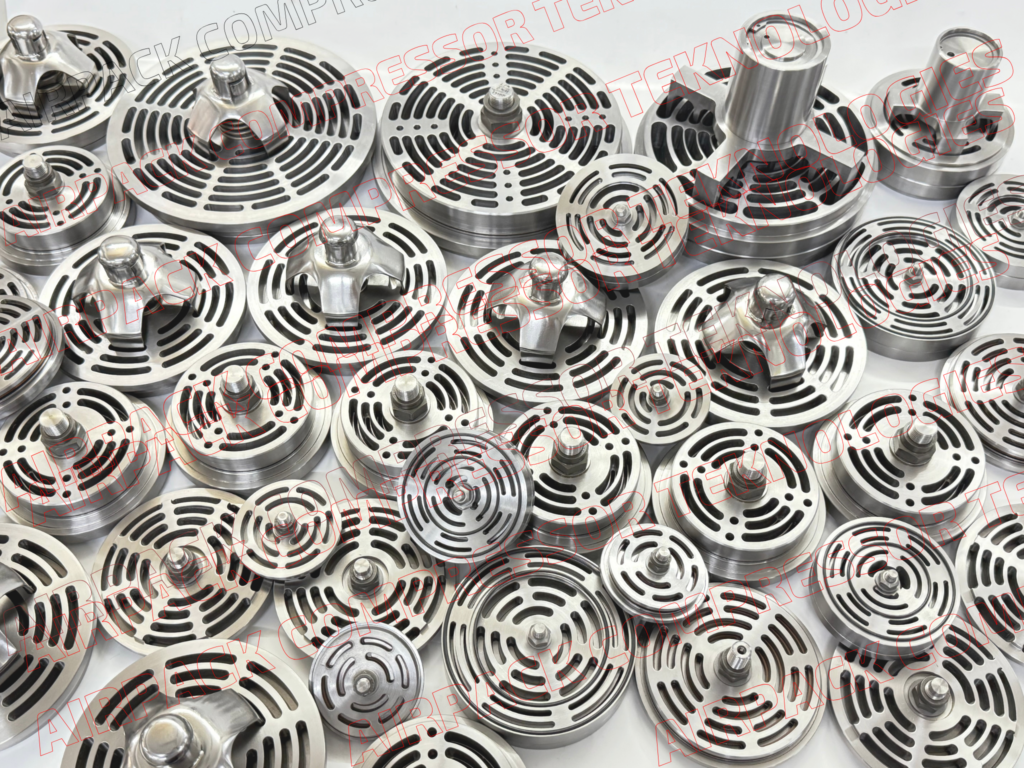
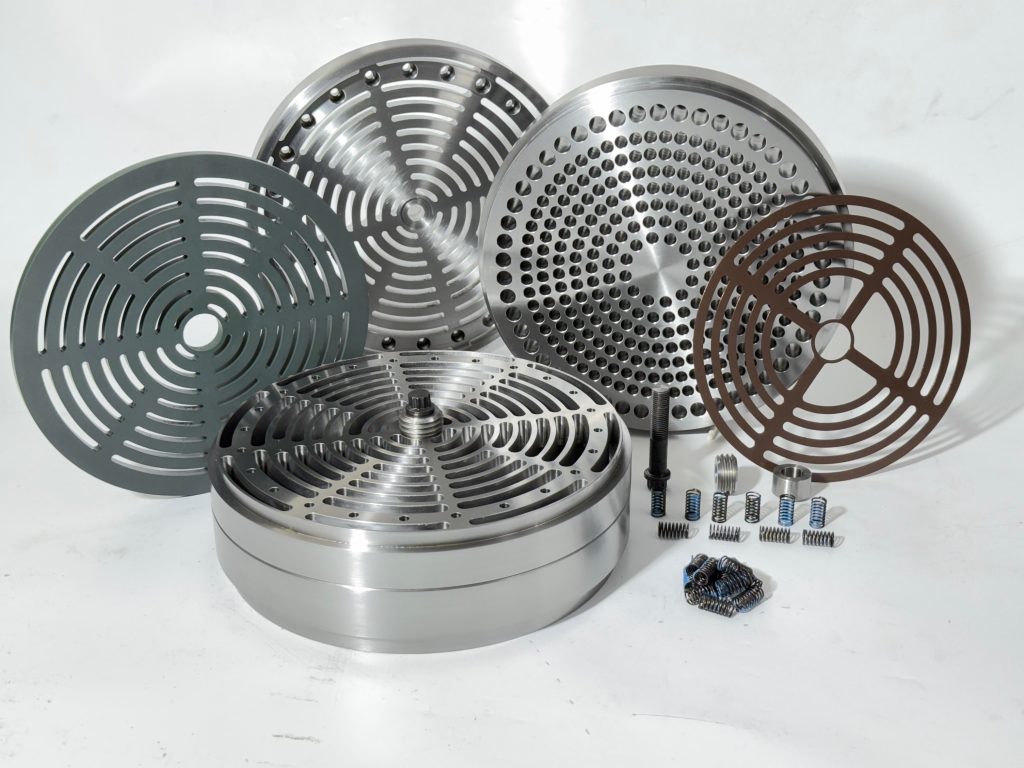
Compressor valve failure is one of the leading causes of performance loss and unplanned downtime in reciprocating compressors. A damaged suction valve or discharge valve can restrict gas flow, increase operating temperatures, and raise energy consumption. it can affect the performance of other critical compressor components.
Industries such as oil and gas, petrochemical, refrigeration, marine, and chemical processing depend on reliable compressor operation. valve issues promptly helps prevent costly repairs, reduce downtime, and maintain efficient compressor performance.
Reciprocating compressor valves operate under repeated pressure, temperature, and mechanical loads. Over time, valve plates, springs, seats, guards, and other components can experience wear, fatigue, impact damage, corrosion, or contamination.
Understanding the causes and warning signs of compressor valve failure allows maintenance teams to take corrective action before a minor component problem becomes an expensive compressor shutdown.
What Is Compressor Valve Failure?
Valve in a compressor is responsible for the flow of gas into and out of the cylinder of a compressor. Suction valves let the flow of gas into the cylinder of the compressor, whereas discharge valves release the compressed gas from the cylinder.
Failure of opening and closing of the valve results in poor efficiency of the compressor.
Following are some of the common valve problems:
- Broken or cracked valve plates
- Damaged valve springs
- Excessive valve seat wear
- Leakage across the valve
- Valve plate fatigue
- Corrosion and erosion
- Carbon or foreign-particle deposits
- Incorrect valve assembly
- Excessive temperature
- Improper clearances
A valve problem should not always be treated by simply replacing the damaged component. The underlying cause must also be investigated.
Main Causes of Compressor Valve Failure.
1. Excessive Operating Temperature.
High discharge temperatures can accelerate material fatigue and damage valve components. Continuous operation outside the compressor’s recommended conditions can reduce the service life of valve plates, springs, and sealing surfaces.
Temperature problems may be associated with:
- Poor cooling
- Incorrect operating conditions
- Excessive compression ratio
- Insufficient lubrication
- Fouled coolers
- Restricted gas flow
Monitoring operating temperatures is therefore an important part of reciprocating compressor maintenance.
2. Foreign Objects and Contamination.
Dust, metal objects, carbon buildup, scale, moisture, or any foreign object could get into the cylinder and affect the movement of the valve.
Foreign objects could get caught between the valve plate and valve seats and prevent the seal from being formed. Repeated impact would lead to damage.
Cleanliness is crucial for the protection of compressor valves.
3. Valve Spring Fatigue.
Valve springs are exposed to repeated cycles during compressor operation. Over time, fatigue can reduce their ability to control the valve plate correctly.
A weakened or broken spring can result in:
- Poor valve response
- Valve flutter
- Leakage
- Increased temperature
- Plate damage
- Reduced compressor capacity
Spring condition should therefore be checked during scheduled inspections.
4. Incorrect Valve Assembly.
Improper installation can significantly reduce valve life. Incorrect orientation, wrong components, improper tightening, unsuitable replacement parts, or incorrect clearances can cause premature failure.
A compressor valve assembly should be installed according to the applicable compressor manufacturer’s specifications and the requirements of the application.
5. Valve Plate Fatigue.
Valve plates work through opening and closing operations. Cyclic loading may lead to fatigue cracks.
The main factors that may lead to fatigue of the valve are:
Too high speed of operation
Presence of high impact loads
Wrong characteristics of springs
Wrong materials used
Inappropriate valve lift
Unusual pressure conditions
Periodic testing may help prevent serious damage because cracks will be detected at an early stage.
6. Improper Lubrication.
In lubricated reciprocating compressors, insufficient or excessive lubrication can contribute to component problems.
Poor lubrication may increase friction and wear in related reciprocating compressor parts, including piston rings, rider rings, packing rings, and other moving components.
Lubrication practices should follow the compressor manufacturer’s recommendations and the requirements of the specific gas service.
7. Improper Operating Conditions.
Compression equipment is designed to operate under specific pressure, temperature, speed, and capacity limits.
Operating beyond those limitations would put additional stress on the valve component and decrease the efficiency of the compression machine.
In case of a valve breakdown, the operators must study the operation record of the equipment to identify any improper conditions that could have caused the damage.
Warning Signs of Compressor Valve Failure.
Early identification can prevent an unexpected shutdown.
Some common warning signs include:
Reduced Compressor Capacity.
A damaged or leaking valve may prevent the compressor from moving the expected volume of gas.
If capacity gradually decreases without an obvious process-related reason, valve condition should be investigated.
Higher Discharge Temperature.
A leaking or poorly sealing valve can increase internal losses and contribute to abnormal temperature conditions.
A sudden or gradual increase in discharge temperature should be investigated rather than ignored.
Increased Energy Consumption.
Power consumption will rise in case the compressor works more to attain the necessary output.
Poor valve performance is thus able to affect compressor energy consumption.
Abnormal Noise or Vibration
Broken plates, damaged springs, valve flutter, loose components, or other mechanical problems can generate unusual sounds or vibration.
Changes from normal operating behavior are valuable early warning indicators.
Common Valve Repairs
Multiple valve repairs may be an effect, not the cause.
Valves that frequently fail after replacement should be looked at for reasons like operating conditions, installation, materials used, contamination, pulsation, and other associated compressor parts.
How to Diagnose Compressor Valve Problems.
A systematic inspection process can help identify the actual failure mechanism.
Step 1: Review Operating Data
Check:
- Suction pressure
- Discharge pressure
- Suction and discharge temperature
- Compressor speed
- Capacity
- Lubrication conditions
- Vibration
- Power consumption
Compare current data with historical operating conditions.
Step 2: Inspect the Valve Assembly
During shutdown and according to appropriate safety procedures, inspect valve plates, seats, springs, guards, and other components for:
- Cracks
- Wear
- Corrosion
- Pitting
- Deformation
- Deposits
- Impact marks
Step 3: Analyze Faulty Parts
A faulty valve plate could be a vital source of data concerning the failure process.
For instance, abnormal wear could suggest that the part was poorly seated, whereas cracks could imply fatigue or mechanical stress.
Step 4: Check Related Compressor Parts
Valve failure can sometimes be associated with problems elsewhere in the compressor.
Inspect relevant reciprocating compressor parts, including:
- Piston rings
- Rider rings
- Packing rings
- Cylinder components
- Fasteners
- Springs
- Valve seats
- Valve guards
A complete inspection provides a better basis for corrective action.
Compressor Valve Repair vs. Valve Assembly Replacement.
The correct solution depends on the extent and cause of the damage.
Compressor Valve Repair
Repair may be appropriate when individual components can be safely restored or replaced while the main valve assembly remains suitable for continued operation.
Potential repair activities include:
- Replacing damaged springs
- Replacing valve plates
- Inspecting valve seats
- Cleaning deposits
- Replacing worn components
- Checking critical dimensions
- Reassembling and testing the valve
Valve Assembly Replacement
A complete valve assembly replacement may be more appropriate when multiple components are damaged, the assembly has reached the end of its service life, or reliable repair cannot be justified.
Replacement should consider:
- Compressor model
- Cylinder conditions
- Gas composition
- Pressure and temperature
- Valve design
- Material requirements
- Operating speed
- Manufacturer specifications
The objective should not simply be to restore operation. It should be to achieve reliable and repeatable performance.
How Quality Compressor Spare Parts Help Reduce Downtime.
Replacement component quality directly affects compressor reliability.
Poorly specified or incorrectly manufactured parts may cause premature wear and repeat failures. For this reason, industrial operators should select compressor spare parts based on application requirements, dimensions, material compatibility, operating conditions, and quality-control procedures.
Depending on the compressor design, commonly required components may include:
- Suction valve assemblies
- Discharge valve assemblies
- Valve plates
- Valve springs
- Valve seats
- Piston rings
- Rider rings
- Packing rings
- Thermoplastic components
- Valve repair kits
A reliable spare-parts supplier can also help maintenance teams identify suitable replacement components and reduce procurement delays.
Conclusion.
Valve failure of the compressor may affect its performance regarding the capacity, energy usage, reliability, and downtime. It is necessary to know what causes such valve failures in order to perform proper maintenance of the reciprocating compressor.
Instead of treating valve failures of the compressor as individual part issues, it is necessary to analyze all factors affecting its operation, including the compressor valves themselves and other parts of the reciprocating compressor.
Frequently Asked Questions
1. What is the most common cause of compressor valve failure?
Common causes include valve fatigue, excessive temperature, foreign-particle contamination, spring failure, incorrect assembly, improper operating conditions, and normal component wear.
2. How do I know if a compressor valve is failing?
Common indicators include reduced capacity, increased discharge temperature, abnormal noise or vibration, increased power consumption, gas leakage, and repeated valve problems.
3. Can a damaged compressor valve be repaired?
In some cases, individual components can be replaced or repaired. However, the complete valve assembly may need replacement when damage is extensive or reliable repair is not practical.
4. How often should compressor valves be inspected?
Inspection intervals depend on compressor design, operating conditions, gas service, manufacturer recommendations, and operating history. Critical applications may require more frequent condition monitoring.
5. Can valve failure reduce compressor efficiency?
Yes. Poor valve sealing can increase compression losses and reduce capacity, potentially increasing the energy required to achieve the desired output.
6. Which reciprocating compressor parts should be inspected with the valves?
Depending on the application, maintenance teams should consider inspecting piston rings, rider rings, packing rings, valve seats, springs, cylinder components, and other related industrial compressor components.
7. How can compressor valve failure be prevented?
Preventive maintenance, correct operating conditions, clean gas supply, proper lubrication, appropriate replacement parts, regular inspections, and monitoring of temperature, pressure, vibration, and capacity can help reduce the risk of failure.
Reciprocating compressor valves operate under repeated pressure, temperature, and mechanical loads. Over time, valve plates, springs, seats, guards, and other components can experience wear, fatigue, impact damage, corrosion, or contamination.
Understanding the causes and warning signs of compressor valve failure allows maintenance teams to take corrective action before a minor component problem becomes an expensive compressor shutdown.
What Is Compressor Valve Failure?
Valve in a compressor is responsible for the flow of gas into and out of the cylinder of a compressor. Suction valves let the flow of gas into the cylinder of the compressor, whereas discharge valves release the compressed gas from the cylinder.
Failure of opening and closing of the valve results in poor efficiency of the compressor.
Following are some of the common valve problems:
- Broken or cracked valve plates
- Damaged valve springs
- Excessive valve seat wear
- Valve plate fatigue
- Corrosion and erosion
- ion-id=””>Carbon or foreign-particle deposits
- =””>Incorrect valve assembly
- “2272” data-end=”2295″ data-section-id=””>Excessive temperature
- Improper clearances
<li data-start=”2134″ data-end=”2160″ data-section-id=””>Leakage across the valve
A valve problem should not always be treated by simply replacing the damaged component. The underlying cause must also be investigated.
Main Causes of Compressor Valve Failure.
1. Excessive Operating Temperature.
High discharge temperatures can accelerate material fatigue and damage valve components. Continuous operation outside the compressor’s recommended conditions can reduce the service life of valve plates, springs, and sealing surfaces.
Temperature problems may be associated with:
- Poor cooling
- Incorrect operating conditions
- ata-section-id=””>Excessive compression ratio
- Insufficient lubrication
- Fouled coolers
- Restricted gas flow
Monitoring operating temperatures is therefore an important part of ata-end=”3074″>reciprocating compressor maintenance.
2. Foreign Objects and Contamination.
Dust, metal objects, carbon buildup, scale, moisture, or any foreign object could get into the cylinder and affect the movement of the valve.
Foreign objects could get caught between the valve plate and valve seats and prevent the seal from being formed. Repeated impact would lead to damage.
Cleanliness is crucial for the protection of compressor valves.
3. Valve Spring Fatigue.
Valve springs are exposed to repeated cycles during compressor operation. Over time, fatigue can reduce their ability to control the valve plate correctly.
ta-start=”3746″ data-end=”3788″>A weakened or broken spring can result in:
-
- Poor valve response
- Valve flutter
- Leakage
- Increased temperature
- Plate damage</li>
- Reduced compr
- essor capacity
<
/ul>
Spring condition should therefor
- e=”list-style-type: none;”>”3906″>e be checked during scheduled inspections.
4. Incorrect Valve Assembly.
Improper installation can significantly reduce valve life. Incorrect orientation, wrong components, improper tightening, unsuitable replacement parts, or incorrect clearances can cause premature failure.
A compressor valve assembly should be installed according to the applicable compressor manufacturer’s specifications and the requirements of the application.
5. Valve Plate Fatigue.
Valve plates work through opening and closing operations. Cyclic loading may lead to fatigue cracks.
The main factors that may lead to fatigue of the valve are:
Too high speed of operation
Presence of high impact loads
Wrong characteristics of springs
Wrong materials used
Inappropriate valve lift
Unusual pressure conditions</p>
Periodic testing may help prevent serious damage because cracks will be detected at an early stage.
6. Improper Lubrication.
In lubricated reciprocating compressors, insufficient or excessive lubrication can contribute to component problems.
Poor lubrication may increase friction and wear in related reciprocating compressor parts, including piston rings, rider rings, packing rings, and other moving components.
rt=”5157″ data-end=”5288″>Lubrication practices should follow the compressor manufacturer’s recomme
ndations and the requirements of the specific gas service.
7. Improper Operating Conditions.
Compression equipment is designed to operate under specific pressure, temperature, speed, and capacity limits.
Operating beyond those limitations would put additional stress on the valve component and decrease the efficiency of the compression machine.
In case of a valve breakdown, the operators must study the operation record of the equipment to identify any improper conditions that could have caused the damage.
Warning Signs of Compressor Valve Failure.
start=”5781″ data-end=”5837″>Early identification can prevent an unexpected shutdown.
Some common warning signs include:
Reduced Compressor Capacity.
A damaged or leaking valve may prevent the compressor from moving the expected volume of gas.
ta-end=”6117″>If capacity gradually decreases without an obvious process-related reason, valve condition should be investigated.
tart=”6119″>data-end=”6151″ data-section-id=””>Higher Discharge Temperature.
A leaking or poorly sealing valve can increase internal losses and contribute to abnormal temperature conditions.
A sudden or gradual increase in discharge temperature should be investigated rather than ignored.
Increased Energy Consumption.
Power consumption will rise in case the compressor works more to attain the necessary output.
Poor valve performance is thus able to affect compressor energy consumption.
Abnormal Noise or Vibration
a-start=”6635″ data-end=”6770″>Broken plates, damaged springs, valve flutter, loose components, or other mechanical problems can generate unusual sounds or vibration.
Changes from normal operating behavior are valuable early warning indicators.</p>
Common Valve Repairs
Multiple valve repairs may be an effect, not the cause.
V
alves that frequently fail after replacement should be looked at for reasons like operating conditions, installation, materials used, contamination, pulsation, and other associated compressor parts.
How to Diagnose Compressor Valve Problems.
A systematic inspection process can help identify the actual failure mechanism.
Step 1: Review Operating Data
Check:
-
-
- Suction pressure
- Discharge pressure
- Suction and discharge temperature
- a-section-id=””>Compressor speed
- Capacity
- nd=”7441″ data-section-id=””>Lubrication conditions
- Vibration
- Power consumption
-
Compare current data with historical operating conditions.
Step 2: Inspect the Valve Assembly
During shutdown and according to appropriate safety procedures, inspect valve plates, seats, springs, guards, and other components for:
-
-
- =”7712″ data-end=”7720″ data-section-id=””>Cracks
- Wear
- Corrosion
- Pitting
- tion-id=””>Deformation
- Deposits
- Impact marks</li>
-
Step 3: Analyze Faulty Parts
A faulty valve plate could be a vital source of data concerning the failure process.
For instance, abnormal wear could suggest that the part was poorly seated, whereas cracks could imply fatigue or mechanical stress.
Step 4: Check Related Compressor Parts
Valve failure can sometimes be associated with problems elsewhere in the compressor.
Inspect relevant reciprocating compressor parts, including:
-
-
- Piston rings
- Packing rings
- =”8288″ data-end=”8309″ data-section-id=””>Cylinder components</li>
- Fasteners
- Springs
- Valve seats
- -end=”8360″ data-section-id=””>Valve guards
-
A complete inspection provides a better basis for corrective action.
ta-start=”8362″ data-end=”8430″>Compressor Valve Repair vs. Valve Assembly Replacement.
The correct solution depends on the extent and cause of the damage.
Compressor Valve Repair
Repair may be appropriate when individual components can be safely restored or replaced while the main valve assembly remains suitable for continued operation.
ata-start=”8750″ data-end=”8786″>Potential repair activities include:
-
-
- a-end=”8981″>
- Replacing damaged springs
- Replacing valve plates
- Inspecting valve seats
- Cleaning deposits
- Replacing worn components
- =””>Checking critical dimensions
- Reassembling and testing the valve
-
Valve Assembly Replacement
A complete valve assembly replacement may be more appropriate when multiple components are damaged, the assembly has reached the end of its service life, or reliable repair cannot be justified.
Replacement should consider:
-
- style=”list-style-type: none;”>
- Compressor model
- Cylinder conditions
- =””>Gas composition
- Pressure and temperature
- Valve design
<
- style=”list-style-type: none;”>
li data-start=”9345″ data-end=”9368″ data-section-id=””>Material requirements
- Operating speed
- Manufacturer specifications<
-
-
- /li>
-
The objective should not simply be to restore operation. It should be to achieve reliable and repeatable performance.
How Quality Compressor Spare Parts Help Reduce Downtime.
Replacement component quality directly affects compressor reliability.
Poorly specified or incorrectly manufactured parts may cause premature wear and repeat failures. For this reason, industrial operators should select compressor spare parts based on application requirements, dimensions, material compatibility, operating conditions, and quality-control procedures.
Depending on the compressor design, commonly required components may include:
-
- start=”3790″ data-end=”3906″>
-
- Suction valve assemblies
- Discharge valve assemblies
- Valve plates
- id=””>Valve springs
- Valve seats
- Piston rings
- Rider rings
- tart=”11955″ data-end=””>=”11970″ data-section-id=””>Packing rings
- Thermoplastic components
- Valve repair kits
-
A reliable spare-parts supplier can also help maintenance teams identify suitable replacement components and reduce procurement delays.
Conclusion.
Valve failure of the compressor may affect its performance regarding the capacity, energy usage, reliability, and downtime. It is necessary to know what causes such valve failures in order to perform proper maintenance of the reciprocating compressor.
Instead of treating valve failures of the compressor as individual part issues, it is necessary to analyze all factors affecting its operation, including the compressor valves themselves and other parts of the reciprocating compressor.
Frequently Asked Questions
1. What is the most common cause of compressor valve failure?
Common causes include valve fatigue, excessive temperature, foreign-particle contamination, spring failure, incorrect assembly, improper operating conditions, and normal component wear.
data-end=”13651″ data-section-id=””>2. Can a damaged compressor valve be repaired?
In some cases, individual components can be replaced or repaired. The complete valve assembly may need replacement when damage is extensive or reliable repair is not practical.
4. How often should compressor valves be inspected?
=”14104″>Inspection intervals depend on compressor design, operating conditions, gas service, manufacturer recommendations, and operating history. Critical applications may require more frequent condition monitoring.
5. Can valve failure reduce compressor efficiency?</h3>
Yes. Po
or valve sealing can increase compression losses and reduce capacity, potentially increasing the energy required to achieve the desired output.
6. Which reciprocating compressor parts should be inspected with the valves?
Depending on the application, maintenance teams should consider inspecting piston rings, rider rings, packing rings, valve seats, springs, cylinder components, and other related industrial compressor components.
7. How can compressor valve failure be prevented?
Preventive maintenance, correct operating conditions, clean gas supply, proper lubrication, appropriate replacement parts, regular inspections, and monitoring of temperature, pressure, vibration, and capacity can help reduce the risk of failure.