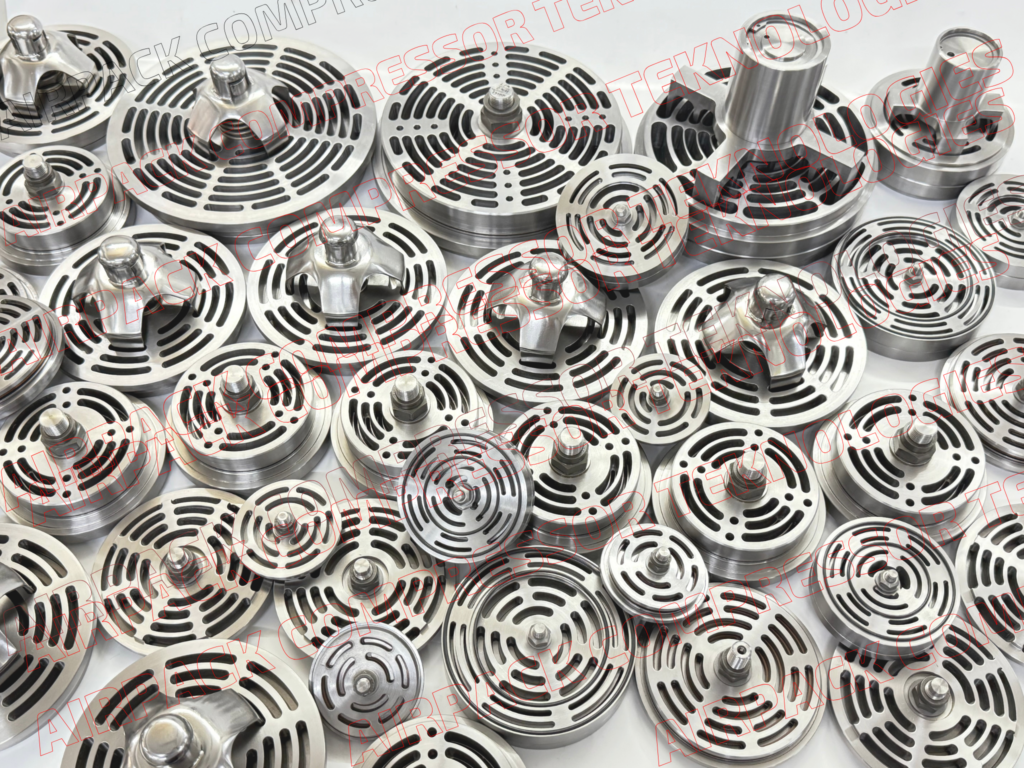
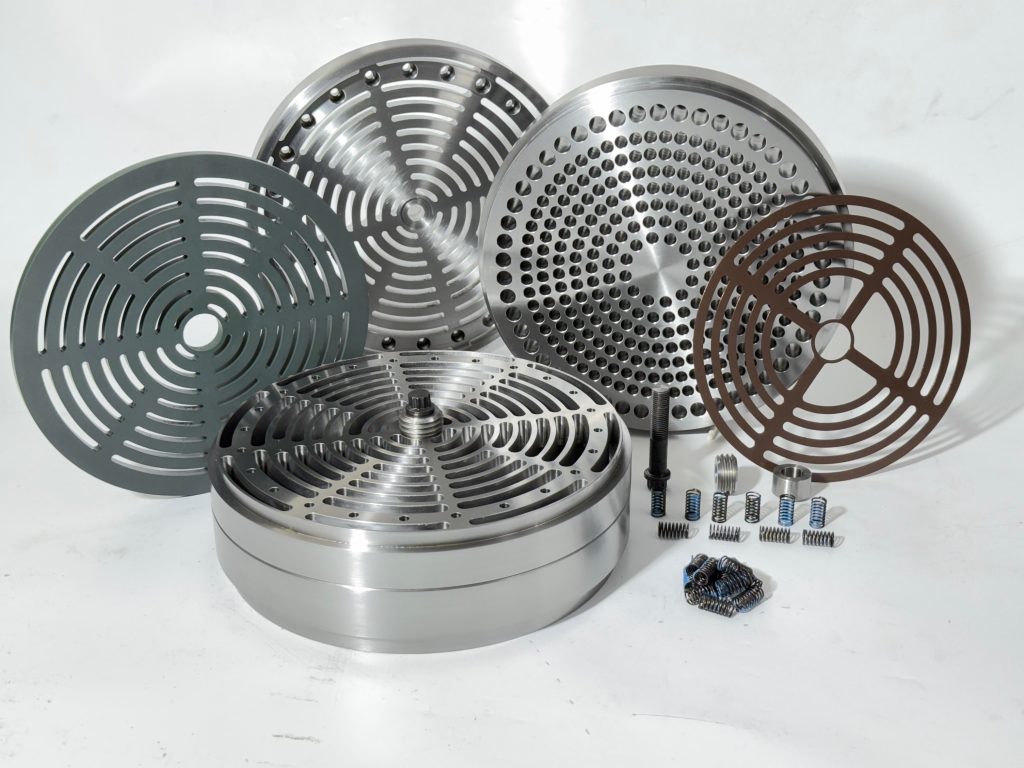
The valve plate is among the major elements of reciprocating compressors which control the flow of gases during the process of suction and discharge. An appropriate selection of a valve plate will increase the efficiency of the compressor and at the same time extend its life while the wrong selection may cause early failures and expensive operations.
What is a Valve Plate?
Valve plate serves as a seal in the compressor valve assembly. It constantly operates opening and closing in the compressor cycle process, allowing gas to pass through but not letting it flow back. Considering the high pressure, temperature, and number of cycles in which valve plates are functioning, materials used in their manufacture are of great importance.
Common Types of Valve Plates.
1. Metallic Valve Plates
Metallic valve plates are commonly manufactured from stainless steel or specialty alloys.
Advantages
- High mechanical strength
- Excellent wear resistance
- Suitable for high-pressure applications
- Long service life in demanding environments
Applications
- Process gas compressors
- Air compressors
- Oil & gas facilities
- Petrochemical plants
2. Thermoplastic Valve Plates
Thermoplastic materials such as PEEK and reinforced nylon are increasingly used in modern compressor valves.
Advantages
- Lightweight design
- Excellent impact resistance
- Reduced operating noise
- Superior corrosion resistance
Applications
- Corrosive gas services
- High-speed compressors
- Moisture-prone environments
Modern thermoplastics often provide improved fatigue resistance and lower noise levels compared to traditional metallic plates.
Selecting the Right Valve Plate Material.
Stainless Steel
Best for:
- General industrial applications
- High-pressure systems
- Moderate corrosion environments
PEEK (Polyetheretherketone)
Best for:
- High-temperature operation
- Chemical processing applications
- Corrosive gas environments
Glass-Filled Nylon
Best for:
- Cost-effective performance
- Moderate temperature applications
- Corrosion-resistant environments
Inconel & Specialty Alloys
Best for:
- Extreme temperatures
- Aggressive chemical exposure
- Offshore and refinery applications
Material selection should always consider:
- Operating pressure
- Gas composition
- Temperature range
- Moisture exposure
- Compressor speed (RPM)
- Expected service life
Key Performance Factors to Evaluate.
Pressure Resistance
The valve plate needs to withstand the system pressure without warping or fracturing.
Heat Resistance
Overheating may result in deformation, fatigue, and poor sealing capabilities.
Fatigue Resistance
The valve plate undergoes cycles of opening and closing millions of times. The high level of fatigue resistance is a must.
Corrosion Resistance
When working with moisture, hydrogen, CO2, sour gas, or other chemicals, corrosion resistance becomes important.
Flow Efficiency
The geometry of the valve affects the pressure losses and efficiency of the compressor.
Common Valve Plate Failures
Understanding failure modes helps prevent costly downtime.
Fatigue Cracking
This is caused by opening and closing cycles.
Impact Damage
The high speed at which valves move may cause damage to the valves when lift and operating conditions are high.
Corrosion
Chemical attack can weaken valve plates and reduce service life.
Warping and Deformation
Exposure to extreme temperatures may alter valve plate dimensions, affecting sealing performance.
Foreign Particle Damage
Contaminants entering the compressor can chip, crack, or break valve plates.
Why the Right Valve Plate Matters.
Quality Valve Plate Directly Affects:
Compressor Efficiency
Energy Usage
Reliability
Maintenance Costs
Equipment Lifetime
The choice of the right material and design is an important factor that may minimize unexpected stoppage and increase production efficiency. There are numerous studies and experiences that show compressor valve failure as the main reason for reciprocating compressor downtime.
Conclusion.
Selection of appropriate valve plate is an important requirement when it comes to getting best out of a reciprocating compressor in terms of performance and life cycle. Various considerations that include material used, operating pressures, temperatures, gas mixture, and speed of the compressor are among many factors influencing the choice of the right valve plate. Knowledge of types of valve plates, potential failure causes, and maintenance procedures can help minimize downtime and increase efficiency.
Need help selecting the right valve plate for your compressor? Contact our engineering team today for a technical consultation and customized valve solution tailored to your application.