Natural gas gathering systems transport gas from production wells to processing facilities and transmission pipelines. Because gas pressure can vary as reservoir conditions change, compression is often necessary to maintain adequate flow and move the gas efficiently through the gathering network.
Reciprocating compressors in natural gas gathering systems help increase gas pressure to meet transportation and processing requirements. These positive-displacement machines are used in applications where operators need to manage changing suction pressures, varying gas flow rates, and demanding operating conditions.
Their performance depends on appropriate equipment selection, correct operating parameters, and regular maintenance of critical components, including compressor valves, valve plates, piston rings, and packing rings.
What Are Natural Gas Gathering Systems?
A natural gas gathering system is a network of pipelines, separators, compression equipment, and associated facilities used to collect gas from production wells and transport it to processing plants or other downstream facilities.
Natural gas gathering systems typically perform the following functions:
- Collect gas from production wells.
- Separate liquids and other contaminants where required.
- Maintain suitable pipeline operating pressures.
- Transport gas to processing facilities.
- Prepare the gas for subsequent processing or transmission.
As gas moves through gathering pipelines, pressure can decrease because of friction, elevation changes, and variations in flow. Compressor stations help overcome these pressure losses and maintain the pressure required for downstream transportation.
What Is a Reciprocating Compressor?
A reciprocating compressor is a positive-displacement machine that increases gas pressure by reducing the volume occupied by gas inside a cylinder using a moving piston.
The basic compression cycle involves the following steps:
- Suction: The piston moves to draw gas into the cylinder through the suction valve.
- Compression: The piston moves in the opposite direction, reducing the gas volume and increasing its pressure.
- Discharge: When the cylinder pressure exceeds the discharge-side pressure and the valve’s opening requirements are met, the discharge valve opens and compressed gas leaves the cylinder.
- Cycle repetition: The piston continues its reciprocating motion, repeating the compression cycle.
Depending on the required pressure increase and gas flow, a compressor may use a single compression stage or multiple stages.
Reciprocating compressors are widely used in natural gas applications because they can provide substantial pressure increases and can be configured for different operating conditions.
Why Are Reciprocating Compressors Used in Natural Gas Gathering Systems?
Natural gas production conditions change over time. Reservoir pressure may decline, gas flow can fluctuate, and the required discharge pressure depends on downstream system requirements.
Reciprocating compressors can be suitable for these applications when their capacity, materials, and operating configuration match the process requirements.
High Compression Capability
Reciprocating compressors can achieve substantial pressure increases, depending on their design, compression stages, cylinder configuration, and operating limits.
This capability makes them useful when gas must move from relatively low-pressure production equipment into a higher-pressure gathering pipeline.
Adaptability to Changing Flow Rates
Gas production may fluctuate as wells mature, additional wells connect to the network, or operating conditions change.
Properly selected reciprocating compressors can accommodate a range of operating conditions through suitable capacity-control arrangements. However, the available operating range depends on the compressor design and control system.
Reliable Field Operation
Gas gathering facilities may operate in remote locations where access to maintenance personnel and replacement components is limited.
Appropriate equipment selection, planned inspections, and timely replacement of worn components help improve operational reliability and reduce unplanned downtime.
Flexible System Configuration
Reciprocating compressors can be configured for different gas compositions, suction pressures, discharge pressures, and flow requirements.
This flexibility makes them useful for various gas gathering applications, provided the equipment is engineered for the specific process conditions.
How Reciprocating Compressors Support Gas Gathering Operations
Reciprocating compressors perform several functions throughout natural gas production and collection networks.
Wellhead Compression
As reservoir pressure declines, gas may no longer flow into the gathering network at the required rate or pressure.
Wellhead compression can lower the required upstream operating pressure and help maintain gas production, subject to reservoir conditions and the overall production system design.
Gathering Line Compression
Gas gathering pipelines experience pressure losses as gas travels toward processing facilities.
Compression stations increase gas pressure where required to support transportation through the network. The location and capacity of each station depend on pipeline design, flow requirements, gas properties, and operating pressures.
Booster Compression
Booster compressors increase gas pressure between different points in a gathering or processing network.
They can help accommodate changing inlet conditions and meet downstream pressure requirements. In multi-stage compression systems, interstage cooling and appropriate equipment selection are important considerations.
Vapor Recovery Applications
Certain reciprocating compressors can be used in vapor recovery systems to recover hydrocarbon vapors from suitable low-pressure sources.
The recovered gas may then be routed to an appropriate collection or processing system instead of being released or flared, where permitted and technically feasible.
The compressor must be selected for the vapor composition, inlet pressure, flow rate, and required discharge conditions.
Key Components of a Reciprocating Compressor
A reciprocating compressor depends on several mechanical components to achieve effective gas compression, sealing, and reliable operation.
Compressor Valves
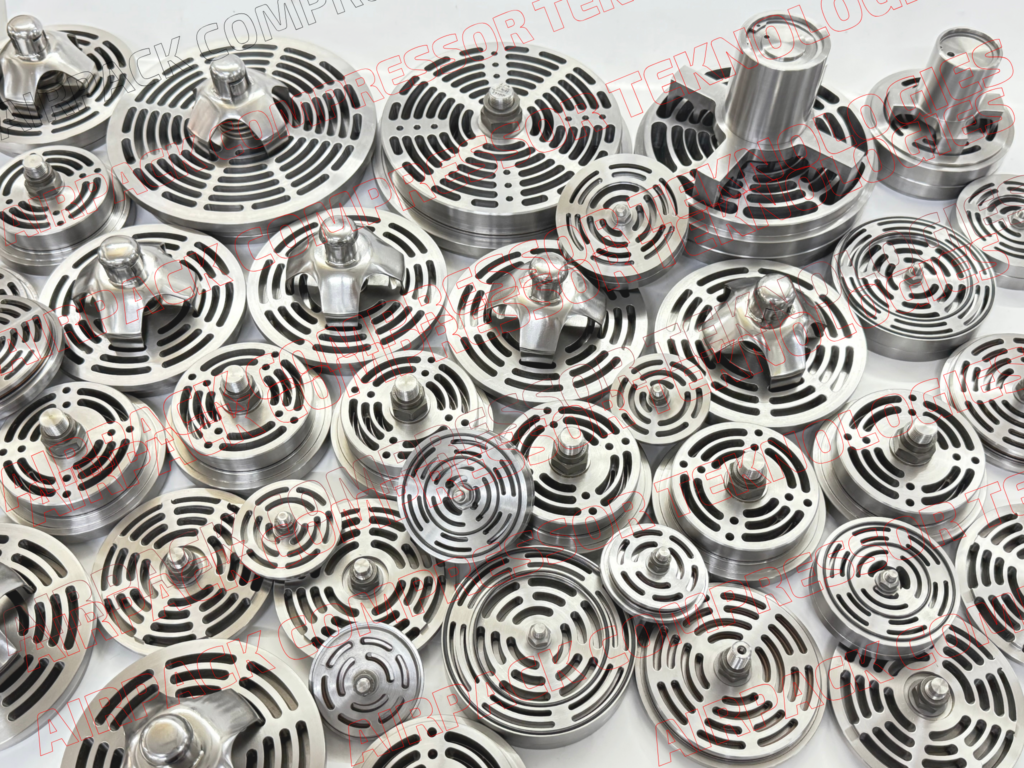
Compressor valves regulate gas flow into and out of the cylinder during the suction and discharge portions of the compression cycle.
Valve condition affects capacity, efficiency, operating temperature, and reliability. Damaged or leaking valves can reduce compressor performance and increase maintenance requirements.
Selecting suitable valve designs and materials for the application helps support reliable operation.
Valve Plates
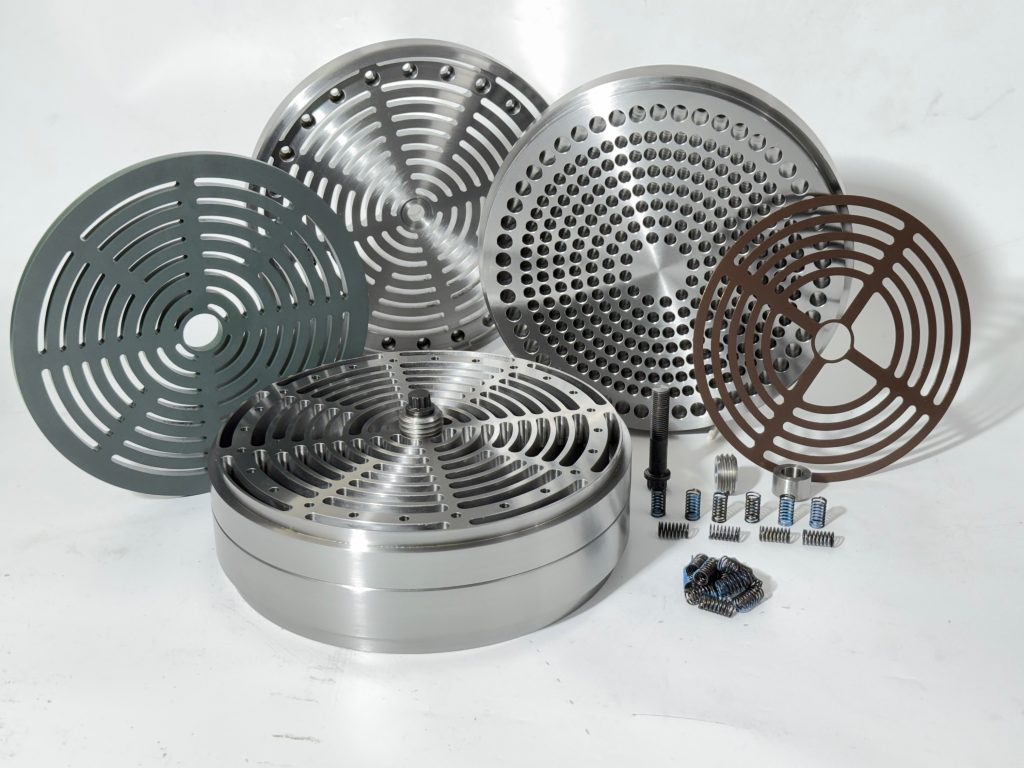
Valve plates are used in certain compressor valve designs to control gas flow.
Depending on the valve configuration, metallic or thermoplastic components may be selected according to operating pressure, temperature, gas compatibility, fatigue requirements, and mechanical loading.
Regular inspection helps identify wear, cracking, deformation, and other damage that may affect valve performance.
Piston Rings and Rider Rings
Piston rings help control gas leakage between the piston and cylinder, depending on the compressor design.
Rider rings provide support and wear protection in configurations where they are used. Their material and dimensions must be compatible with the cylinder, operating temperature, loading, and lubrication conditions.
Correct installation and inspection help maintain suitable clearances and reliable compressor performance.
Packing Rings
Piston rod packing rings help limit gas leakage where the piston rod passes through the cylinder packing assembly.
These rings must maintain an appropriate seal while allowing the rod to move freely.
Wear, misalignment, damage, and incorrect installation can increase leakage. Routine inspection and timely maintenance are therefore important for both operational performance and emissions management.
Compressor Springs
Springs are used in certain compressor valve designs to help control valve element movement and support reliable opening and closing.
Their performance depends on the valve design, spring characteristics, operating conditions, and material suitability.
Damaged or fatigued springs can affect valve operation and should be inspected according to the manufacturer’s maintenance recommendations.
Cylinder Assemblies
The cylinder provides the chamber in which gas compression takes place.
Its design must accommodate the required pressure, temperature, gas properties, and mechanical loads. Depending on the application, cylinders may also incorporate cooling arrangements and specialized sealing configurations.
Proper inspection helps identify wear, damage, and other conditions that may affect safe and reliable operation.
Benefits of Reciprocating Compressors in Natural Gas Gathering Systems
Improved Gas Recovery Potential
Compression can help maintain gas flow as reservoir pressure declines, potentially allowing operators to continue producing gas that would otherwise be difficult to transport.
Actual recovery depends on reservoir characteristics, production constraints, compressor capacity, and the economics of the installation.
Effective Pressure Management
Reciprocating compressors can increase gas pressure to meet gathering pipeline and downstream process requirements.
Correct sizing and control help operators maintain suitable operating conditions across changing production scenarios.
Operational Flexibility
A properly configured compressor can accommodate a range of operating conditions, including changing suction pressure and gas flow.
This flexibility depends on the equipment’s design limits and available capacity-control systems.
Maintenance-Based Reliability
Regular inspection of valves, piston rings, packing rings, lubrication systems, and other critical components helps identify developing problems before they lead to major failures.
Planned maintenance can improve equipment availability and reduce unexpected downtime.
Potential for Improved Operating Economics
Efficient compression, appropriate capacity control, and well-maintained components can help reduce avoidable energy consumption and maintenance costs.
Actual operating costs depend on compressor efficiency, driver type, gas conditions, maintenance requirements, and operating strategy.
Challenges in Natural Gas Gathering Applications
Although reciprocating compressors are suitable for many gas gathering applications, operators must account for several operating challenges.
Changing Gas Composition
Natural gas composition can vary between wells and over time.
Water vapor, heavier hydrocarbons, and other constituents can affect material compatibility, corrosion risk, condensation, and operating requirements.
Gas analysis and appropriate upstream separation are important for selecting and operating suitable compression equipment.
Variable Suction and Discharge Pressures
Changes in reservoir pressure, production rates, and downstream pipeline requirements can affect compressor operating conditions.
Operators must ensure that the compressor remains within its permitted operating envelope as these conditions change.
Component Wear and Gas Leakage
Valves, piston rings, packing rings, bearings, and other components experience wear during operation.
In particular, deterioration of piston rod packing can increase natural gas leakage. Regular inspections and timely maintenance help manage this risk.
Temperature Management
Gas temperature rises during compression.
Interstage cooling, aftercooling, and appropriate temperature monitoring may be required, depending on the compressor configuration and process conditions.
Maintaining suitable temperatures helps protect equipment and support reliable operation.
Vibration and Mechanical Loading
Reciprocating compressors generate dynamic forces during operation.
Appropriate foundation design, piping arrangements, vibration monitoring, and mechanical inspections help identify problems that could affect equipment reliability.
Best Practices for Maintaining Reciprocating Compressors
A structured preventive maintenance program helps maintain compressor performance and identify potential failures.
Inspect Compressor Valves Regularly
Inspect valves for wear, cracking, deposits, damaged springs, and other conditions that may affect sealing or movement.
Follow the manufacturer’s inspection intervals and replacement recommendations.
Monitor Vibration Levels
Monitor vibration trends and investigate unusual changes.
Excessive or increasing vibration may indicate mechanical looseness, alignment problems, foundation issues, or other operating abnormalities.
Inspect Critical Compressor Components
Include the following components in the maintenance plan, as applicable to the compressor design:
- Compressor valves and valve assemblies
- Valve plates and springs
- Piston rings and rider rings
- Piston rod packing rings
- Bearings and associated mechanical components
- Cylinders and related sealing arrangements
Record inspection findings and replace damaged components in accordance with manufacturer specifications.
Check Lubrication Systems
Inspect lubrication levels, oil condition, filters, and delivery systems according to the equipment manufacturer’s recommendations.
Correct lubrication is important for reducing wear in components that require lubrication. Some compressor designs use different lubrication arrangements, so maintenance procedures must reflect the actual equipment configuration.
Monitor Operating Temperatures
Track suction, discharge, and interstage temperatures where applicable.
Investigate readings that move outside the specified operating range, as they may indicate cooling problems, valve issues, changes in gas conditions, or other faults.
Maintain Appropriate Operating Records
Record operating pressures, temperatures, vibration readings, maintenance activities, and component replacements.
These records help identify recurring problems, evaluate equipment condition, and support maintenance planning.
Conclusion
Reciprocating compressors play an important role in natural gas gathering systems by increasing gas pressure to support transportation from production wells to processing facilities.
Their ability to provide substantial pressure increases and operate under varying process conditions makes them suitable for many gathering and boosting applications. However, successful operation depends on correct equipment selection, appropriate capacity control, and regular maintenance.
Components such as compressor valves, valve plates, piston rings, rider rings, packing rings, and springs contribute to overall performance and reliability. Inspecting these components and addressing wear or damage promptly can help reduce downtime, control gas leakage, and maintain efficient operation.
For operators and maintenance teams, understanding compressor requirements and following equipment-specific maintenance procedures are essential to achieving reliable long-term performance.
Frequently Asked Questions
1. Why Are Reciprocating Compressors Used in Natural Gas Gathering Systems?
Reciprocating compressors increase gas pressure to support transportation from production wells to processing facilities. They can provide substantial pressure increases and can be configured for different gas flow rates and operating conditions.
2. What Is the Role of Compression in Natural Gas Gathering?
Compression raises gas pressure when necessary to overcome pipeline pressure losses and meet downstream transportation or processing requirements.
3. Which Components Require Regular Maintenance in Reciprocating Compressors?
Depending on the compressor design, important components include compressor valves, valve plates, springs, piston rings, rider rings, piston rod packing rings, bearings, and lubrication systems.
4. Can Reciprocating Compressors Handle Changing Gas Flow Rates?
Yes. Properly configured reciprocating compressors can accommodate a range of gas flow conditions. The available operating range depends on compressor capacity, cylinder configuration, and capacity-control arrangements.
5. How Does Compression Support Natural Gas Recovery?
Compression can help maintain production as reservoir pressure declines by allowing gas to enter and move through the production and gathering system at suitable operating pressures. The actual benefit depends on reservoir conditions and the overall system design.
6. How Do Packing Rings Help Improve Compressor Performance?
Piston rod packing rings help limit gas leakage around the moving piston rod. Regular inspection and replacement when required help control leakage and maintain reliable operation.
7. Why Is Compressor Valve Maintenance Important?
Worn or damaged valves can cause internal leakage, reduced capacity, higher discharge temperatures, and increased energy consumption. Regular inspection helps maintain suitable compressor performance.