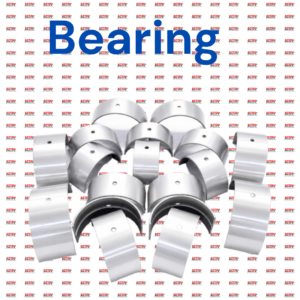
 Consistency in operations is facilitated by well-fabricated parts in machines employed within industry Of all the important parts, bearings and bushes are very vital in providing reduced friction, enabling rotation of the machine parts, and increasing the lifespan of the machines. These components are widely used in compressors, pumps, industrial motors, and heavy machinery.
reciprocating compressors, high-quality bearings and bushes are essential for reliable performance. Inexpensive bearings and bushes will wear easily, will produce too much vibration, will lose energy, and may even cause the machine to malfunction. High-quality bearings and bushes improve efficiency and support smooth machine operation
What are Bearings and Bushes?
Bearings and bushings are mechanical parts which provide reduction of friction between the moving parts, facilitating rotational and sliding movement.
A bearing is a combination of rolling parts like balls or rollers situated between two rings, which reduces the friction of the rotation. Bearings find wide application in the mechanisms with high-speed requirements.
Bushes perform well under heavy loads, low-speed operation, and limited lubrication conditions.
Why Bearings and Bushes Are Important in Reciprocating Air Compressors?
Reciprocating air compressors work under constant pressure, heat, and motion. The role of bearings and bushes is to ensure proper alignment of moving parts by reducing friction.
The functions of bearings and bushes include:
Sustaining rotating shafts
Decreasing metal on metal contact
Ensuring shaft alignment
Carrying machine load
Noise reduction
Increasing machine efficiency
Enhancing equipment longevity
Prevention of failure
The absence of well-designed bearings and bushes will result in poor performance of the compressor, and ultimately, costly maintenance and downtime.
Components of Bearings and Bushes?
Industrial bearings and bushes consist of several key components. The most common components are listed below.
1. Inner Ring
The inner ring fits directly onto the shaft and rotates with it. It provides a smooth running surface for rolling elements.
Features
- Precision-machined
- High dimensional accuracy
- Excellent wear resistance
2. Outer Ring
The outer ring remains fixed inside the housing. It supports the bearing assembly and ensures stable operation.
Functions
- Maintains bearing stability
- Supports external loads
- Ensures accurate positioning
Common types include:
- Steel balls
- Cylindrical rollers
- Needle rollers
- Tapered rollers
- Spherical rollers
4. Cage or Separator
The cage evenly spaces rolling elements and prevents them from rubbing against each other.
Benefits include:
- Reduced friction
- Lower operating temperature
- Longer bearing life
5. Bush Sleeve
The bush sleeve acts as the sliding surface between the shaft and housing.
Common materials include:
- Bronze
- Brass
- Cast Iron
- PTFE
- Composite materials
- Engineering plastics
- Carbon-filled polymers
6. Lubrication System
Lubrication reduces heat generation and protects against wear.
Industrial lubrication options include:
- Grease
- Compressor oil
- Self-lubricating bushes
- Dry lubrication coatings
Bearings vs Bushes: Key Differences
| Feature | Bearings | Bushes |
| Motion | Rolling | Sliding |
| Friction | Very Low | Low |
| Speed | High-Speed Applications | Low to Medium Speed |
| Maintenance | Moderate | Low |
| Cost | Higher | Economical |
| Load Capacity | High | Very High |
| Lubrication | Usually Required | Sometimes Self-Lubricating |
| Compressor Usage | Rotating Shafts | Shaft Support & Housing |
Benefits of High-Quality Bearings and Bushes.
Premium bearing and bushes selection will provide multiple benefits from operation to finance.
1.Minimized Friction
Use of high-grade materials decreases friction among moving parts, enhancing efficiency of machine operation and decreasing its energy consumption.
2.Extended Service life
Precision engineering ensures that the wear of such components as shafts, housings, pistons, etc. is reduced.
3. Improved Machine Performance
Properly fitted bearings and bushes help maintain accurate shaft alignment, resulting in smoother operation and consistent compressor performance.
4. Lower Maintenance Costs
Reliable components require fewer replacements, reducing maintenance expenses and labor costs over time.
5.Lower Downtime
Unplanned equipment breakdown may delay production schedule. Quality bearings and bushes enhance reliability and avoid any unscheduled downtime.
6.Even Load Distribution
Industrial bearings and bushes allow even load distribution on radial and axial directions, which avoids stress on machinery components.
7.Corrosion Resistance
Several industrial processes subject equipment to moisture, dust, chemical attacks, and temperature extremes. Advanced materials offer high resistance to such environmental stresses.
Applications of Bearings and Bushes.
Bearings and bushes are used across numerous industrial systems where rotating or sliding motion occurs.
Common Applications.
- Reciprocating Air Compressors
- Rotary Compressors
- Industrial Pumps
- Hydraulic Equipment
- Pneumatic Systems
- Electric Motors
- Gearboxes
- Crankshafts
- Conveyor Systems
- Industrial Blowers
- Power Transmission Equipment
- Heavy Machinery
- Textile Machinery
- Mining Equipment
- Construction Machinery
- Marine Equipment
- Agricultural Machines
- Oil & Gas Compressors
Their versatility makes them indispensable in modern industrial operations where precision and durability are critical.
Industries Using Bearings and Bushes.
Bearings and Bushes in Industries efficiency and reliability, bearings and bushes find application in many industries.
Manufacturing Industry
In CNC machines, assembling machines, conveyor belts, and automated assembly lines.
Oil & Gas Industry
In support of compressors, pumps, and drilling machines that operate at high pressures.
Petrochemical Industry
In rotating machines that work in harsh corrosive conditions.
Power Generation Industry
Turbines, generators, compressors, and auxiliary machines.
Cement Plants
Suitable for use in crushing, conveying, kilning, and other applications using heavy, rotating machinery and abrasive material.
Steel Industry
Used in support of rolling mills, industrial motors, and handling machinery working under heavy loads.
Mining Industry
Offer reliable service in crushing, excavation, drilling, and conveyor applications under difficult conditions.
Pharmaceutical Industry
Bearing and bushes of precision quality offer smooth and contamination-free performance of processing and packing equipment.
Food Processing Industry
Food grade bearing and self-lubricating bushes provide clean operation.
Automotive Industry
Widely used in engines, transmissions, steering systems, suspension components, and industrial manufacturing equipment.
Selection of Suitable Bearings and Bushes
The right choice of bearings and bushes plays an important role in enhancing the efficiency of equipment and reducing the cost of maintenance. Incorrect selection may cause early wearing, high energy usage, vibrations, and sudden breakdown of machinery.
1.Loading
Identify the nature of loading in your particular application – radial loading, axial loading, or both.
2.Speed of Operation
Bearings perform well in high-speed applications. Bushes are preferred for low- and medium-speed machines with heavy loads.
3.Material Considerations
Material selection is dependent upon the environment of the machine.
Typical materials are as follows:
Bronze
Brass
PTFE
Cast Iron
Stainless Steel
Carbon Steel
Composite Materials
Engineering Plastics
5.Environmental Temperature
High temperatures are common with industrial compressors. Components should always be selected for their resistance to such temperatures.
6.Corrosion Resistant Material
Corrosion resistant material offers longevity to equipment which is operated in moist, chemical or marine environments.
7.Reputation of the Manufacturer
Cooperation with an industrial manufacturer is important for ensuring quality of performance.
Maintenance Tips for Bearings and Bushes
Maintenance is very important as it increases the service life of bushes and bearings.
Cleanliness
Prevent dust or dirt from getting inside the bearing housing.
Temperature Checks
Unusual temperature changes can be signs of lubrication and friction issues.
Replace Worn Components Promptly
Delaying replacement may damage shafts, housings, and other expensive compressor components.
Installation
Wrong installation is among the main reasons why the bearings fail prematurely.
Why Quality Matters?
The benefits of high-quality are:
High-dimensional accuracy
Increased lifespan
Enhanced wear-resistance
Less vibration
Less energy consumption
Efficient compressor operation
Reduced maintenance
Greater reliability
Lower cost of ownership
Higher ROI
Conclusion.
Bearings and bushes are vital components that directly influence the efficiency, reliability, and lifespan of industrial machinery. Bearings and bushes are used in reciprocating air compressors and heavy-duty manufacturing equipment. They reduce friction, improve load distribution, and support smooth machine operation. High-quality improve equipment performance. They reduce maintenance costs, minimize downtime, and increase production efficiency. Using the correct materials, maintaining the correct lubrication and choosing a reputable manufacturer will allow you to get maximum benefits from your investments.