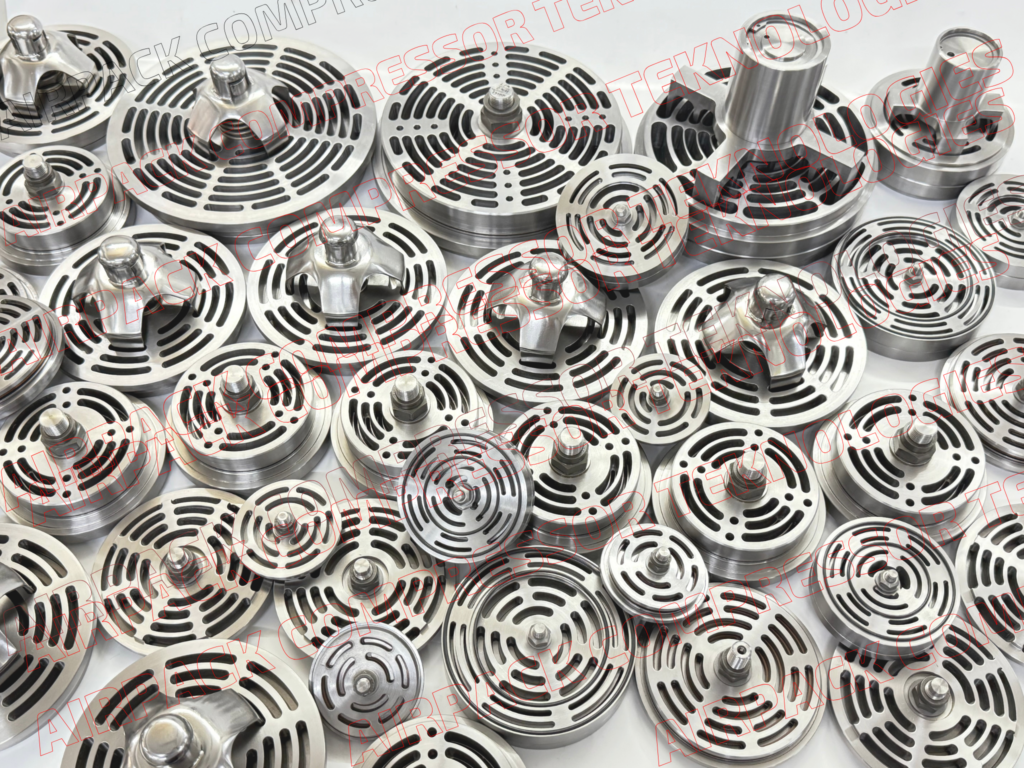
Reciprocating compressor parts are the essential components that work together to compress gases efficiently in industrial applications. These compressors are widely used in industries such as oil & gas, petrochemicals, power plants, LNG, CNG, and manufacturing facilities.
The performance, efficiency, and reliability of a compressor largely depend on the quality and condition of its components. Understanding the function of each part helps improve maintenance planning, reduce downtime, and increase equipment lifespan.
What Are Reciprocating Compressor Parts?
Reciprocating compressor parts are the individual components that enable the compressor to convert mechanical energy into compressed gas. These parts operate in coordination to perform the suction, compression, and discharge cycles.
A well-maintained set of reciprocating compressor parts ensures:
- Higher operational efficiency
- Reduced gas leakage
- Lower maintenance costs
- Increased equipment reliability
- Extended service life
Major Reciprocating Compressor Parts and Their Functions.
Piston
The piston is among the essential compressor components. It is a component that moves inside the cylinder to compress the gas.
Advantages of good piston:
Compression efficiency
Wear resistance
Sealing effectiveness
Piston Rings
Piston rings are fitted around the piston to create a seal between the piston and cylinder wall.
Their primary functions include:
- Preventing gas leakage
- Reducing friction
- Improving compressor efficiency
Rider Rings
Rider rings guide the piston and prevent direct metal-to-metal contact between the piston and cylinder.
Advantages of rider rings:
- Reduced wear
- Enhanced equipment life
- Smooth compressor operation
Critical Sealing Components in Reciprocating Compressor Parts.
Compressor Packing Cases
Packing cases are designed to prevent gas leakage along the piston rod while allowing smooth rod movement.
Key benefits include:
- Effective sealing
- Improved safety
- Reduced product loss
Rod Rings
The rod rings have a significant role to play in the support and guidance of the piston rod.
They assist in:
Reducing rod wear
Ensuring alignment
Increasing efficiency of the compressor
Valve Components in Reciprocating Compressor Parts.
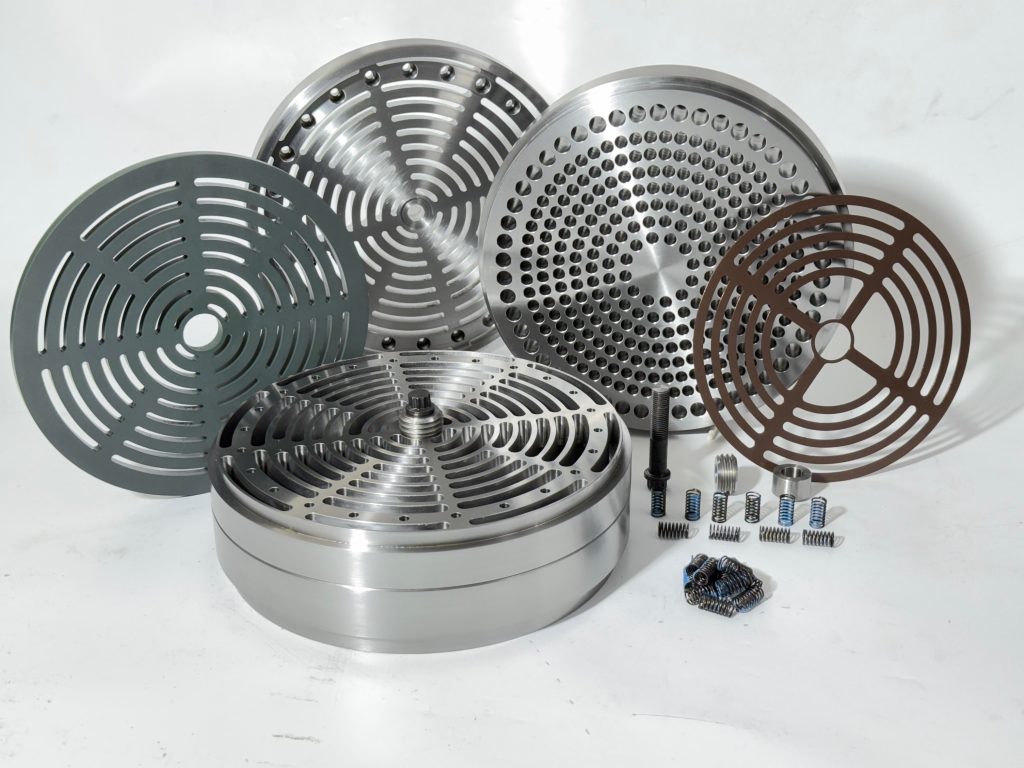
Compressor Valves
Compressor valves control the flow of gas during suction and discharge cycles.
A high-performance valve offers:
- Higher efficiency
- Lower energy consumption
- Improved compressor reliability
Valve Plates
Valve plates open and close repeatedly during compressor operation.
They must provide:
- Fast response
- Excellent durability
- Consistent sealing performance
Valve Springs
Valve springs ensure proper opening and closing of compressor valves.
Benefits include:
- Stable operation
- Reduced vibration
- Enhanced valve life
Materials Used in Reciprocating Compressor Parts
Advanced Materials for Better Performance
Modern reciprocating compressor parts are manufactured using specialized materials such as:
- PTFE compounds
- Carbon-filled PTFE
- Bronze-filled PTFE
- Stainless steel
- Alloy steel
- Cast iron
These materials offer:
- High wear resistance
- Chemical compatibility
- Low friction
- Long service life
Choosing High-Quality Reciprocating Compressor Parts.
Factors to Consider
When selecting compressor parts, consider:
- Material quality
- Dimensional accuracy
- Operating conditions
- Pressure requirements
- Temperature resistance
- Manufacturer expertise
High-quality components improve compressor efficiency and reduce total ownership costs.
Why Precision Manufacturing Matters
Precision-engineered reciprocating compressor parts provide:
- Better sealing performance
- Reduced gas leakage
- Lower energy consumption
- Increased operational reliability
Applications of Reciprocating Compressor Parts
These parts are commonly used in:
- LNG Plants
- CNG Stations
- Refineries
- Petrochemical Facilities
- Fertilizer Plants
- Power Generation Units
- Industrial Gas Processing Plants
Conclusion
compressor parts are the foundation of reliable performance. Components such as pistons, piston rings, rider rings, packing cases, valves, rod rings, cylinders, and crosshead assemblies work together to ensure efficient gas compression. Investing in high-quality compressor parts and following proper maintenance practices helps improve productivity, reduce downtime, and maximize equipment life in demanding industrial environments.
Frequently Asked Questions (FAQs)
1. What are reciprocating compressors part?
Reciprocating compressors parts are the components that enable a compressor to perform gas compression, including pistons, cylinders, valves, piston rings, rider rings, packing cases, and rod rings.
2. Which parts are most critical in a compressor?
The most critical reciprocating compressor parts include the piston, cylinder, valves, piston rings, rider rings, packing cases, and crankshaft.
3. How often should reciprocating compressor parts be inspected?
Inspection frequency depends on operating conditions, but most industrial compressors should undergo routine inspections every few months and comprehensive maintenance during scheduled shutdowns.
4. What causes wear in reciprocating compressors part?
Common causes include inadequate lubrication, contamination, high operating temperatures, improper alignment, excessive vibration, and normal operational wear.
5. Why are piston rings important in reciprocating compressors?
Piston rings create an effective seal between the piston and cylinder wall, preventing gas leakage and improving compression efficiency.