 Piston and Rider Rings for Reciprocating Compressors
Piston and rider rings are essential components of reciprocating compressors, helping maintain effective gas sealing, support piston movement and reduce wear between moving surfaces. Selecting the right rings is important for compressor reliability, operating efficiency and maintenance planning.
Airpack Compressor manufactures compressor spare parts for industrial applications. Our piston and rider ring solutions can be specified according to applicable material requirements, component dimensions and compressor operating conditions.
Whether you require replacement rings or components manufactured to an approved drawing, understanding their functions, materials and selection criteria can help you identify the right solution for your reciprocating compressor.
What Are Piston Rings in a Reciprocating Compressor?
Piston rings are fitted into grooves on a compressor piston. Their primary function is to control gas leakage between the piston and cylinder wall, helping the compressor maintain the required pressure during operation.
The performance of piston rings depends on several factors, including the ring material, design, operating temperature, pressure, gas composition, lubrication conditions and dimensional accuracy.
Key Functions of Piston Rings.
- Help control gas leakage between the piston and cylinder.
- Support effective compression and pressure retention.
- Reduce friction when the appropriate material and operating conditions are maintained.
- Accommodate wear according to the ring design.
- Support reliable compressor operation when correctly selected and installed.
Common Piston Ring Materials.
Piston rings can be manufactured from different materials depending on the application.
PTFE and filled PTFE: Used in suitable applications where low friction, chemical compatibility and wear performance are required.
Carbon-filled composites: Used in applications where the required combination of strength, wear resistance and operating characteristics makes them suitable.
Cast iron: Used in certain compressor designs, particularly where the operating conditions and lubrication requirements are compatible with the material.
Other engineering materials: Bronze and specialised –compounds may be appropriate for specific designs and operating environments.
What Are Rider Rings?
Rider rings are fitted around the piston in a reciprocating compressor to support the piston within the cylinder. They help maintain appropriate clearance between the piston and cylinder wall, reducing the risk of direct metal-to-metal contact.
Unlike piston rings, whose primary function is gas sealing, rider rings primarily provide piston support and wear protection.
Key Functions of Rider Rings.
- Support the piston during reciprocating movement.
- Help prevent direct contact between the piston and cylinder wall.
- Reduce wear on associated compressor surfaces when correctly selected.
- Help maintain appropriate piston positioning and clearance.
- Contribute to dependable compressor operation.
Rider ring performance depends on material properties, ring geometry, loading, clearances and operating conditions. Incorrect selection or excessive wear can contribute to piston alignment and cylinder wear problems.
Difference Between Piston Rings and Rider Rings.
Piston rings and rider rings perform different but complementary functions in a reciprocating compressor.
| Piston Rings | Rider Rings |
|---|---|
| Control gas leakage | Support the piston |
| Sealing | Bearing and wear protection |
| In designated piston grooves | In designated piston grooves |
| Sealing requirements, material, pressure and temperature | Piston load, clearance, material and operating conditions |
| Leakage, wear and sealing performance | Wear, clearance and piston support |
Materials Used in Piston and Rider Rings.
PTFE and Filled PTFE Compounds
PTFE-based materials are used in suitable compressor applications because of their low-friction characteristics and chemical resistance. Fillers may be incorporated to modify wear resistance, strength and other performance properties.
Carbon-Filled Materials
It is possible to select carbon-filled compounds for uses that demand specific wear and mechanical properties. This will depend on the compound formulation and working environment.
Cast Iron and Bronze
Metallic materials such as cast iron and bronze may be used in compressor applications where their mechanical properties, lubrication requirements and operating conditions are appropriate.
Common Piston and Rider Ring Designs.
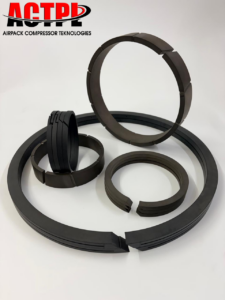
Piston and rider rings are available in different designs according to compressor construction and application requirements.
Examples can include straight-cut, angle-cut and step-cut configurations, where appropriate to the component and equipment design.
The correct configuration depends on the original component specifications, groove geometry, cylinder dimensions and operating conditions.
Industrial Applications of Piston and Rider Rings.
Piston and rider rings are used in reciprocating compressors across several industrial sectors.
Oil and Gas
Used in suitable gas compression applications, including gas processing and pipeline systems.
Chemical Processing
Support compressor operation in chemical facilities where material compatibility with the process gas is essential.
Petrochemical Plants
Used in reciprocating compressor systems operating under specified process conditions.
Industrial Gas Processing
Suitable ring materials and designs may be selected for specific gas compression duties, subject to equipment and material compatibility requirements.
How to Select the Right Piston and Rider Rings.
Before ordering replacement rings, verify the following details.
- Compressor manufacturer and model: Identify the equipment requiring replacement components.
- Part number: Provide the original part number wherever available.
- Component dimensions: Confirm the required diameter, width, thickness and groove dimensions from approved specifications.
- Material requirements: Specify the material or approved material grade.
- Operating conditions: Provide relevant pressure, temperature, gas composition and lubrication details.
- Ring design: Confirm the required cut, configuration and other design features.
- Drawing or sample: Supply an approved technical drawing or sample when available and appropriate.
These details help the supplier assess component compatibility and manufacturing requirements before an order is confirmed.
Signs That Piston or Rider Rings May Need Inspection.
Ring wear and damage can affect compressor performance. Depending on the equipment design, potential warning signs may include:
- Changes in compressor capacity or pressure performance.
- Increased gas leakage.
- Abnormal wear on associated components.
- Unusual operating temperatures.
- Increased maintenance requirements.
These symptoms can have multiple causes and do not automatically confirm ring failure. Inspection should follow the equipment manufacturer’s maintenance procedures and applicable safety requirements.
Why Choose Airpack Compressor?
Airpack Compressor supplies compressor spare parts for industrial applications. When enquiring about piston and rider rings, customers can share the compressor model, part number, approved drawing and operating requirements to help establish the appropriate component specifications.
For related requirements, explore our piston rods, packing rings and other reciprocating compressor spare parts.
Conclusion
Piston and rider rings perform complementary functions in reciprocating compressors. Piston rings help control gas leakage, while rider rings support the piston and reduce the risk of direct contact with the cylinder wall.
Selecting the appropriate material, design and dimensions is essential for reliable operation and effective maintenance. By confirming the equipment specifications before ordering, industrial buyers can improve component compatibility and make better-informed replacement decisions.
Contact Airpack Compressor to discuss your piston and rider ring requirements for reciprocating compressor applications.
Frequently Asked Questions
1. What is the main function of piston rings in a reciprocating compressor?
Piston rings help control gas leakage between the piston and cylinder wall, supporting the compressor’s sealing and pressure-retention requirements.
2. What is the purpose of rider rings?
Rider rings support the piston and help prevent direct metal-to-metal contact between the piston and cylinder wall.
3. What is the difference between piston rings and rider rings?
Piston rings primarily perform a sealing function, whereas rider rings primarily support the piston and help protect the cylinder and associated surfaces from wear.
4. How do I select the correct compressor rings?
Check the compressor model, original part number, dimensions, material requirements, ring configuration and operating conditions. An approved drawing or sample can help establish the required specifications.
Request a Quote for Piston and Rider Rings
Looking for piston and rider rings for a reciprocating compressor?
Contact Airpack Compressor with your component drawing, part number, dimensions and compressor model. Our team can review your requirements and advise on the next steps for a suitable replacement or custom-manufacturing enquiry.
Request a quotation today to discuss your compressor component requirements.