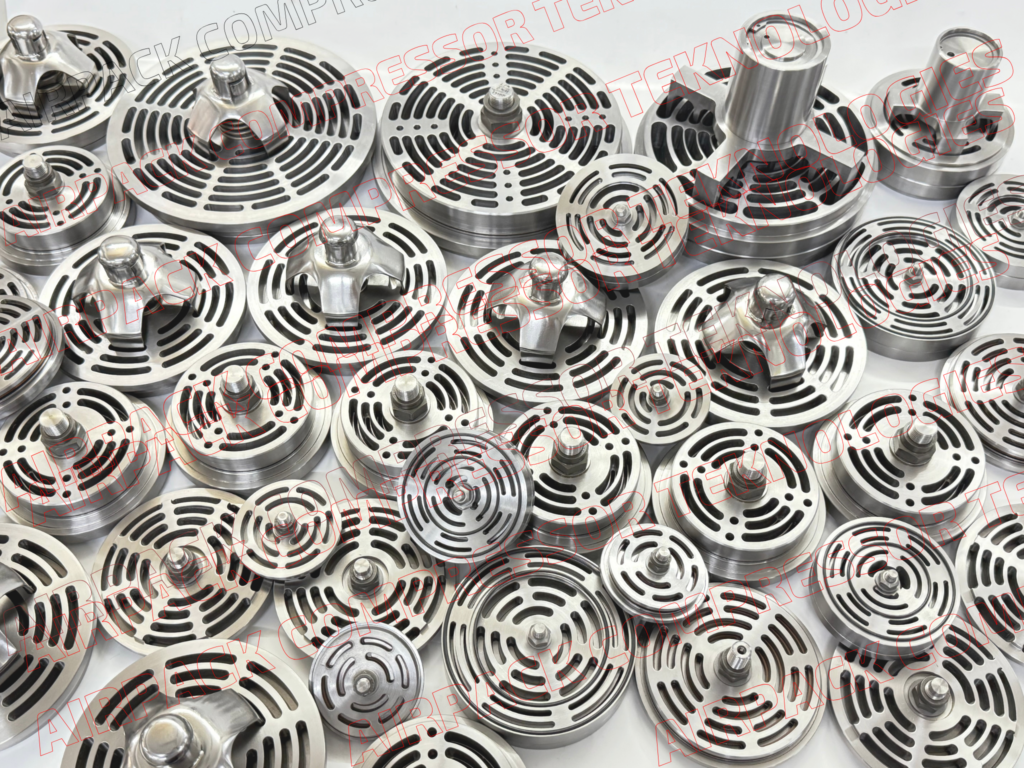
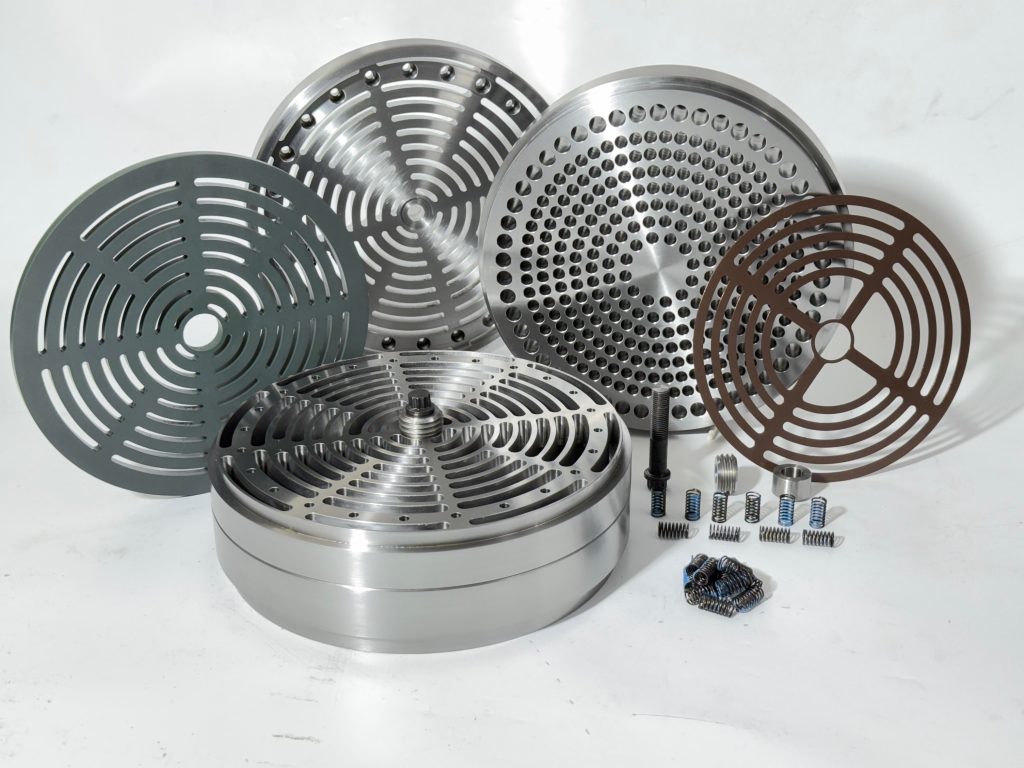
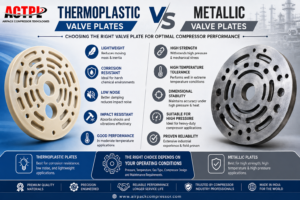
 Choosing the right valve plate can have a direct impact on compressor efficiency, reliability, operating temperature, maintenance frequency, and service life. Two common options used in reciprocating compressors are thermoplastic valve plates and metallic valve plates compressors design, operating pressure, gas composition, temperature, valve loading, application, and maintenance requirements. We compare thermoplastic vs metallic valve plates in detail so compressor manufacturers, maintenance engineers, procurement teams, and plant operators can make a technically sound choice.
What Is a Compressor Valve Plate?
A compressor valve plate is a precision component used in reciprocating compressors to control the movement of gas through the suction and discharge valve passages.
During operation, the plate repeatedly opens and closes as the compressor cycles. Because it is exposed to pressure fluctuations, temperature changes, impact, and repeated loading, its material and geometry are important for compressor performance.
A properly selected valve plate can help support:
- Efficient gas flow
- Reliable valve operation
- Reduced leakage
- Lower pressure losses
- Consistent compressor performance
- Longer component life
For this reason, selecting between thermoplastic and metallic construction should be based on the actual operating environment rather than material preference alone.
Thermoplastic Valve Plates: What Are They?
Thermoplastic valve plates are manufactured from high-performance engineering polymers designed to operate in demanding compressor applications.
These materials can provide a combination of low weight, chemical resistance, impact tolerance, and good fatigue performance.
Advantages of Thermoplastic Valve Plates.
Thermoplastic plates offer several potential benefits:
1. Reduced Weight
In comparison to the traditional metal parts, polymer plates may have a much lower weight. Reduced reciprocating mass will assist in lowering the mechanical stress caused by valve motion.
2. Good Impact Resistance
Certain compressor-grade thermoplastics can absorb repeated impact more effectively than some rigid metallic materials. This can be particularly useful in applications where valve components experience frequent cycling.
3. Corrosion and Chemical Resistance
The polymeric materials inherently resist a variety of corrosive atmospheres. This characteristic can make them desirable as compressor material for corrosive gases.
4. Lower Valve Noise
Because thermoplastic materials generally have different damping characteristics from metals, they can help reduce impact noise generated during valve operation in suitable applications.
5. Reduced Inertial Forces
Their lower density can reduce the mass that the valve mechanism has to accelerate and decelerate during operation.
Metallic Valve Plates: What Are They?
Metallic valve plates are manufactured from specially selected steels, stainless steels, alloy steels, and other engineered metals.
They remain widely used because metal provides high strength, dimensional stability, and resistance to demanding pressure and temperature conditions.
Advantages of Metallic Valve Plates.
1. High Mechanical Strength
Metallic construction can provide strong resistance to mechanical loading, making it suitable for demanding compressor applications.
2. High-Temperature Capability
Metal components can maintain dimensional and mechanical stability across a broad range of operating temperatures, depending on the specific alloy and treatment.
3. Dimensional Stability
Metallic plates can provide excellent consistency under high pressure and thermal loading when correctly specified and manufactured.
4. Suitable for High-Pressure Applications
Certain alloy steel and stainless-steel valve plates are well suited to high-pressure compressor services where mechanical strength is critical.
5. Proven Industrial Performance
Metallic valve technology has been used extensively in reciprocating compressors, giving engineers a large base of application experience and established maintenance practices.
Thermoplastic vs Metallic Valve Plates: Key Differences
The most important differences relate to weight, strength, temperature capability, corrosion resistance, impact characteristics, and application suitability.
1.Material and Construction
Thermoplastic valves are manufactured using engineered plastic material, and metal valves are manufactured from steel or other metal alloys.
The choice of material influences the performance of the valve when it is subjected to stresses, temperatures, chemicals, and repetitive operations.
2. Weight
Thermoplastic plates generally have a lower density than metallic alternatives.
This can reduce moving mass and may contribute to favorable dynamic valve behavior.
Metallic plates are heavier, but the additional mass can be acceptable or desirable in applications where rigidity and strength take priority.
3. Stiffness and Rigidness
The stiffness and mechanical strength of metal tend to be higher.
Thermoplastics can still give good results if engineered correctly, but they tend to be more temperature-dependent than metallic materials.
Thus, the choice of material is application-dependent.
4. Temperature Resistance
Metallic valve plates generally have a broader high-temperature operating capability.
Thermoplastics have material-specific temperature limits, and their properties can change as operating temperature increases.
Therefore, the actual gas temperature and valve temperature should always be considered before selecting a polymer plate.
5. Corrosion Resistant Properties
A significant benefit of using thermoplastic structures is that they resist corrosive surroundings.
The metallic plates might need an alloy that is suitable for use in corrosive conditions.
6. Noise and Damping
Thermoplastic materials can provide useful damping characteristics because polymers behave differently from rigid metals under impact.
This may help reduce valve impact noise in appropriate applications.
Metallic plates can produce higher impact noise depending on valve design, operating speed, and material combination.
7. Wear and Service Life
Neither material should automatically be considered superior in every application.
Component life depends on factors such as:
- Operating speed
- Pressure differential
- Temperature
- Gas composition
- Valve lift
- Stress concentration
- Surface finish
- Manufacturing accuracy
- Valve design
- Installation quality
A properly engineered valve plate can provide reliable service regardless of whether the material is thermoplastic or metallic.
Which Valve Plate Is Better?
In general, there is no definite winner when comparing the thermoplastic and metallic valve plates. It all depends on which property is required for the compressor’s operation. The advantages of thermoplastic valve plates include lightness, impact resistance, corrosion resistance, and dampening. Advantages of metallic valve plates include high mechanical strength and heat resistance.
When Should You Choose Thermoplastic Valve Plates?
A thermoplastic solution may be worth considering when the application requires:
- Reduced component weight
- Good corrosion resistance
- Lower moving mass
- Improved impact damping
- Resistance to specific chemicals
- Reliable operation under repetitive cycling
However, polymer compatibility with the gas, temperature, pressure, and lubrication conditions must be verified before use.
When Should You Choose Metallic Valve Plates?
Metallic valve plates may be better suited to applications involving:
- High operating temperatures
- High pressure
- Significant mechanical loading
- Severe industrial environments
- High dimensional stability requirements
- Applications where established metal valve designs are preferred
Material grade, hardness, heat treatment, surface finish, and manufacturing quality all influence final performance.
Thermoplastic Valve Plates vs Metal Valve Plates for Reciprocating Compressors.
For reciprocating compressor applications, the choice cannot be made by looking at material alone. Valve geometry is equally important. The plate thickness, profile, sealing area, valve lift, stress distribution, and interaction with springs and valve seats influence the final performance of the complete valve assembly. A premium material cannot compensate for an incorrectly designed valve. This is why compressor valve plate manufacturers typically evaluate the complete operating environment before recommending a material.
How to Select the Right Compressor Valve Plate.
Before choosing a replacement or new valve plate, evaluate the following factors.
Operating Pressure
Determine suction and discharge pressure and the pressure differential across the valve.
Higher pressure conditions generally increase mechanical and fatigue loading.
Gas Composition
The gas being compressed can influence corrosion, chemical compatibility, lubrication, and material degradation.
This is especially important when considering polymer-based components.
Operating Temperature
Record both gas temperature and component temperature.
A material that performs well at moderate temperature may behave differently under continuous high-temperature exposure.
Compressor Speed
Higher operating speeds mean more valve cycles per unit of time.
This increases the importance of fatigue resistance, dynamic response, and valve movement.
Valve Design
Consider the complete valve assembly rather than the plate in isolation.
Seat geometry, spring characteristics, lift, clearance, and flow path all influence valve performance.
Maintenance Conditions
A material that performs well technically may not be the best choice if replacement availability, inspection procedures, or plant maintenance practices favor another design.
Common Problems Caused by the Wrong Valve Plate.
Using an improper plate may cause problems with the performance and efficiency of the system.
The following are the possible indications of a poor plate design:
Valve Leakages
Sealing problems and the wrong geometry may result in compressed air leaking from the valve.
Increased Temperature of Discharge
Leaking valves, as well as increased pressure losses, may lead to high temperatures of the compressor.
Decreased Efficiency of the Compressor
Faulty valves may use more energy and thus decrease the volumetric efficiency of the compressor.
Early Plate Failure
Overloading, thermal stresses, inappropriate material, or impact loading may shorten the lifespan of the plate.
Maintenance Problems
Valve component failures may occur more often.
Conclusion.
Valve plates that are thermoplastic vs metallic are one of the engineering considerations in reciprocating compressors. The use of thermoplastic valves gives advantages in terms of weight and ability to dampen vibrations and also resist corrosion, while the use of metallic valves continues to provide great advantage for mechanical strength and temperature capability. The best approach will come from the choice of the valve plate based on real compressor parameters, and not on the material chosen simply due to assumptions. It is always advisable that in order to have a good operation of your compressor, there must be a combination of the design, material grade, manufacturing, and application compatibility. When using industrial compressors, it is always prudent to work with a good compressor valve plate manufacturer.
Frequently Asked Questions
Are thermoplastic valve plates better than metallic valve plates?
Not in every application. Thermoplastic plates can offer lower weight, good damping, and corrosion resistance, while metallic plates can provide high strength and strong high-temperature performance. Selection should be application-specific.
What is the main advantage of a thermoplastic valve plates?
Its main advantages can include low weight, good impact resistance, corrosion resistance, and favorable damping characteristics.
What is the main advantage of a metallic valve plate?
Metallic plates offer high mechanical strength, rigidity, dimensional stability, and suitability for demanding temperature and pressure conditions.
Are thermoplastic valve plates suitable for high-pressure compressors?
They can be suitable for some high-pressure applications, but suitability depends on the specific polymer grade, temperature, pressure, gas composition, valve design, and manufacturer specifications.
Do metallic valve plates last longer than thermoplastic ones?
Not necessarily. Service life depends on design, material, compressor conditions, manufacturing quality, installation, and maintenance.
Can I replace a metallic valve plate with a thermoplastic one?
Only after confirming dimensional and engineering compatibility. Material substitution should be validated for pressure, temperature, chemical exposure, stress, and valve dynamics.
Which material is better for corrosive gases?
Thermoplastic materials can provide strong corrosion resistance in many environments, but compatibility must be checked against the specific gas and operating conditions.