 Valve materials play a critical role in the performance, efficiency, and reliability of reciprocating compressors. Compressor valves operate continuously under varying pressures, temperatures, and gas compositions. Therefore, selecting the right valve materials for reciprocating compressors is essential to ensure long service life, reduced maintenance, and optimal compressor performance.
The choice of material affects valve durability, wear resistance, corrosion resistance, and overall operating efficiency. Modern reciprocating compressors use a variety of materials depending on the application, operating conditions, and compressor design.
Why Valve Material Selection Matters
Reciprocating compressor valves are subjected to constant opening and closing cycles. During operation, valve components experience mechanical stress, pressure fluctuations, and temperature variations. Poor material selection can lead to premature wear, valve failure, increased energy consumption, and costly downtime.
Choosing suitable valve materials helps:
- Improve compressor efficiency
- Increase valve service life
- Reduce maintenance costs
- Minimize downtime
- Enhance operational reliability
- Improve resistance to wear and corrosion
For this reason, manufacturers carefully select materials based on the compressor’s operating environment.
Key Properties of Compressor Valve Materials
When selecting valve materials for reciprocating compressors, several important properties must be considered.
Strength and Fatigue Resistance
Valve components repeatedly open and close thousands of times every hour. Materials with high fatigue strength can withstand continuous cycling without cracking or failure.
Wear Resistance
Valve plates, rings, and seats experience frequent contact during operation. Wear-resistant materials help maintain sealing efficiency and reduce replacement frequency.
Corrosion Resistance
Compressors handling aggressive gases require materials that resist chemical attack and corrosion.
Temperature Stability
High-temperature applications demand materials that maintain their mechanical properties under thermal stress.
Lightweight Construction
Lightweight materials reduce valve impact forces and improve compressor efficiency, particularly in high-speed compressors.
Common Valve Materials Used in Reciprocating Compressors
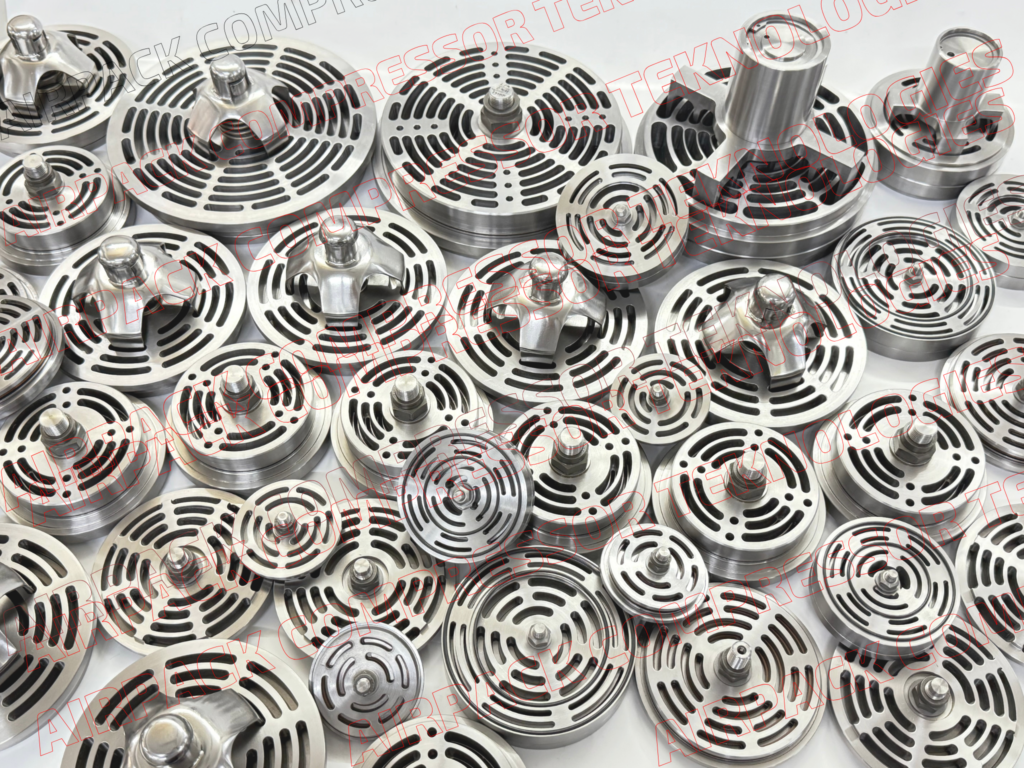
Stainless Steel
Stainless steel is one of the most commonly used materials for compressor valve components. It offers an excellent balance of strength, durability, and corrosion resistance.
Advantages of Stainless Steel
- High mechanical strength
- Excellent corrosion resistance
- Long service life
- Good fatigue performance
- Suitable for high-pressure applications
Typical Applications
- Air compressors
- Industrial gas compressors
- Chemical processing plants
- Petrochemical facilities
PEEK (Polyether Ether Ketone)
PEEK is a high-performance engineering thermoplastic widely used in modern compressor valve plates and rings.
Advantages of PEEK
- Exceptional wear resistance
- High-temperature capability
- Excellent chemical resistance
- Lightweight design
- Reduced valve noise
Typical Applications
- Oil-free compressors
- Process gas compressors
- Pharmaceutical industries
- Chemical manufacturing plants
Carbon Fiber Composite
Carbon fiber composite materials are increasingly popular in reciprocating compressor valves due to their lightweight and high-strength characteristics.
Advantages of Carbon Fiber Composite
- Low weight
- High strength-to-weight ratio
- Reduced impact stress
- Improved compressor efficiency
- Longer valve life
Typical Applications
- High-speed compressors
- Natural gas compressors
- Industrial process systems
Alloy Steel
Alloy steel is commonly used in demanding compressor environments where superior strength and durability are required.
Advantages of Alloy Steel
- Excellent fatigue strength
- High wear resistance
- Superior mechanical properties
- Suitable for heavy-duty applications
Typical Applications
- High-pressure compressors
- Power generation facilities
- Heavy industrial operations
Advanced Thermoplastics
Modern compressor manufacturers also use advanced thermoplastics in valve components requiring lightweight construction and corrosion resistance.
Advantages of Advanced Thermoplastics
- Lightweight design
- Excellent corrosion resistance
- Low friction characteristics
- Reduced maintenance requirements
Typical Applications
- Oil-free compressor systems
- Air compression applications
- Medium-pressure operations
Materials Used in Different Compressor Valve Components
Different valve components require specific material properties to perform effectively.
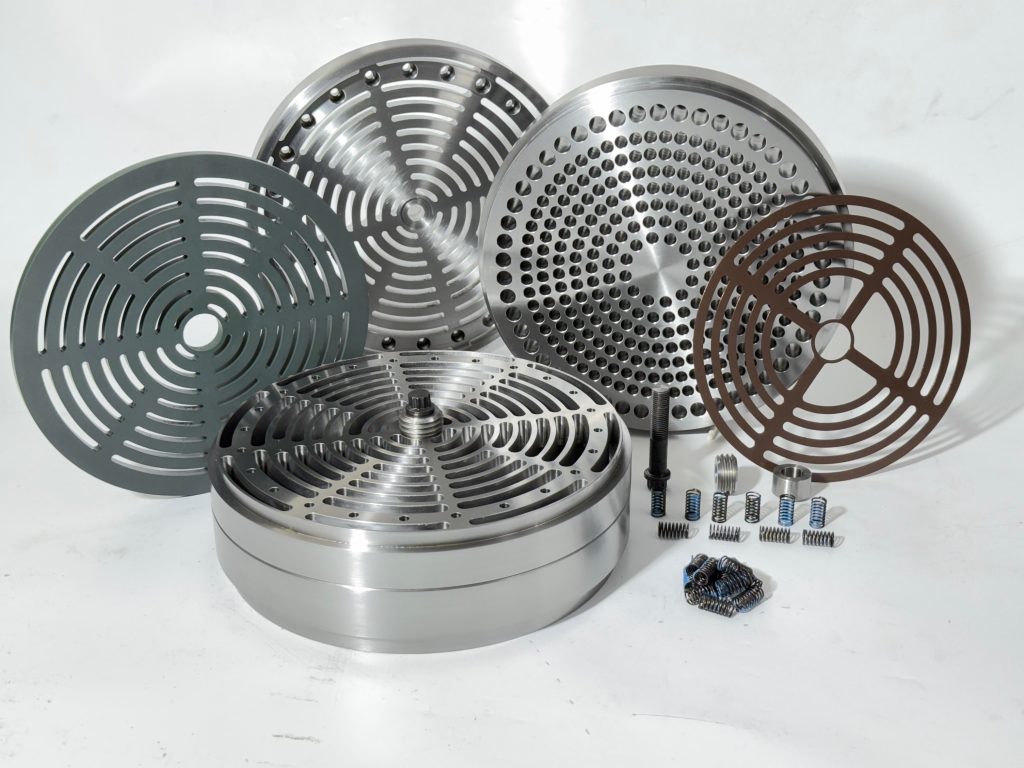
Valve Plates
Valve plates control gas flow during suction and discharge cycles. Common materials include:
- Stainless steel
- PEEK
- Carbon fiber composites
- Advanced thermoplastics
Valve Rings
Valve rings require excellent wear resistance and sealing capability. They are commonly manufactured from:
- PEEK
- Carbon fiber composites
- Engineered plastics
Valve Springs
Valve springs must withstand continuous cycling and fatigue loading. Common materials include:
- Stainless steel
- Spring steel
- Alloy steel
Valve Seats
Valve seats provide the sealing surface for valve operation. Typical materials include:
- Stainless steel
- Hardened alloy steel
- Specialized wear-resistant alloys
Valve Guards
Valve guards protect internal valve components and ensure proper movement. Common materials include:
- Stainless steel
- Alloy steel
- High-strength composites
Factors Affecting Material Selection
Several operating conditions influence the choice of valve materials.
Operating Pressure
Higher pressures require stronger materials capable of handling increased mechanical loads.
Gas Type
Corrosive or reactive gases may require materials with superior chemical resistance.
Compressor Speed
High-speed compressors often benefit from lightweight materials that reduce impact forces and valve stress.
Temperature Conditions
Elevated temperatures demand materials with excellent thermal stability and strength retention.
Maintenance Requirements
Facilities seeking longer maintenance intervals often select premium materials with enhanced wear resistance.
Benefits of High-Quality Valve Materials
Selecting premium valve materials offers numerous operational advantages.
Improved Compressor Efficiency
Proper material selection reduces flow losses and enhances valve response, improving overall compressor performance.
Extended Service Life
Wear-resistant materials help increase valve lifespan and reduce replacement frequency.
Lower Maintenance Costs
Durable valve components require fewer repairs, lowering maintenance expenses.
Reduced Downtime
Reliable materials minimize unexpected failures and improve operational continuity.
Enhanced Reliability
High-quality valve materials ensure consistent compressor performance even under demanding operating conditions.
Emerging Trends in Compressor Valve Materials
Advancements in material technology continue to improve compressor valve performance. Manufacturers are increasingly adopting:
- Carbon fiber reinforced composites
- Advanced engineering polymers
- High-performance thermoplastics
- Wear-resistant composite materials
- Lightweight valve designs
These innovations help improve energy efficiency while extending component life.
Conclusion
The selection of valve materials for reciprocating compressors significantly impacts compressor efficiency, reliability, and maintenance requirements. Materials such as stainless steel, PEEK, carbon fiber composites, alloy steel, and advanced thermoplastics each provide unique benefits depending on the application.
By choosing the appropriate valve material based on operating pressure, temperature, gas composition, and compressor speed, industries can improve compressor performance, reduce downtime, and extend equipment life. Investing in high-quality valve materials is a practical step toward achieving reliable and cost-effective compressor operation.
Frequently Asked Questions (FAQs)
1. What are the most commonly used valve materials for reciprocating compressors?
The most commonly used valve materials for reciprocating compressors include stainless steel, PEEK (Polyether Ether Ketone), carbon fiber composites, alloy steel, and advanced thermoplastics. Each material offers specific benefits such as wear resistance, corrosion resistance, high strength, and temperature stability, making them suitable for different compressor applications.
2. Why is material selection important for reciprocating compressor valves?
Material selection directly affects valve performance, durability, and efficiency. The right reciprocating compressor valve materials help reduce wear, improve sealing performance, resist corrosion, and extend service life. Proper material selection also minimizes maintenance costs and reduces unplanned downtime.
3. Which valve material is best for high-temperature compressor applications?
PEEK and stainless steel are among the best materials for high-temperature compressor applications. These materials maintain their mechanical properties under elevated temperatures and provide excellent wear and chemical resistance, making them ideal for demanding operating environments.
4. How do carbon fiber compressor valves improve compressor efficiency?
Carbon fiber compressor valves are lightweight and have a high strength-to-weight ratio. Their reduced weight decreases valve impact forces during operation, resulting in faster valve response, lower energy consumption, and improved compressor efficiency. They are particularly beneficial in high-speed reciprocating compressors.
5. How can the right valve materials extend compressor life?
High-quality compressor valve materials resist wear, fatigue, corrosion, and thermal stress. By maintaining effective sealing and reliable valve operation, these materials help prevent premature component failure. As a result, compressor performance improves, maintenance requirements decrease, and equipment life is extended.