Introduction
In industrial operations, maintaining consistent compressor performance is essential for productivity, energy efficiency, and equipment longevity. One of the most important yet often overlooked components responsible for achieving this is the unloader.
An unloader helps a reciprocating air compressor start smoothly, regulate pressure, reduce unnecessary power consumption, and protect critical compressor components from excessive stress. Whether used in manufacturing plants, petrochemical facilities, power generation, or gas processing industries, a high-quality unloader contributes significantly to reliable compressor performance.
Selecting the proper unloader cannot be reduced to merely replacing a component that has worn out. This process must take into account issues of the operating pressure, compressor type, application, and maintenance of the component. A well-selected unloader will increase efficiency and prolong the compressor’s lifespan.
In this comprehensive guide, you’ll learn everything you need to know about unloaders, including their working principle, major components, different types, advantages, industrial applications, and how they improve the performance of reciprocating air compressors.
What is an Unloader?
An unloader is a pressure-control device installed in a reciprocating air compressor that temporarily unloads or relieves compressor pressure during startup or under specific operating conditions.
Instead of forcing the compressor to start under full system pressure, the unloader releases trapped compressed air. This minimizes motor load, lowers starting torque, prevents mechanical stress, and improves overall compressor efficiency.
Unloaders also help regulate compressor operation by allowing the machine to run without compressing air whenever demand decreases. This prevents unnecessary energy consumption and reduces wear on internal compressor parts.
Why is an Unloader Important?
Without an effective unloader, compressors may experience:
- Hard starting
- Motor overloading
- Increased energy consumption
- Higher operating temperatures
- Frequent maintenance
- Reduced equipment life
- Unexpected downtime
A properly designed unloader ensures smooth operation while protecting both the compressor and its connected systems.
How Does an Unloader Work?
The working principle of an unloader is relatively simple but highly effective.
During compressor startup, pressure trapped inside the cylinder or discharge line creates resistance against the piston. The unloader releases this trapped pressure before the motor begins operating.
Once the compressor reaches normal operating speed, the unloader automatically closes, allowing compression to begin normally.
When the system pressure reaches the preset limit, the unloader activates again to stop unnecessary compression until pressure drops below the cut-in level.
This automatic cycle improves operational efficiency while reducing power consumption.
Typical Operating Cycle.
- Compressor starts.
- Unloader opens and releases trapped pressure.
- Motor starts with minimal load.
- Compressor reaches operating speed.
- Unloader closes.
- Air compression begins.
- Pressure reaches preset level.
- Unloader activates again until demand increases.
This cycle continues automatically throughout compressor operation.
Main Components of an Unloader.
Although designs vary depending on the compressor manufacturer, most unloaders include the following essential components.
-
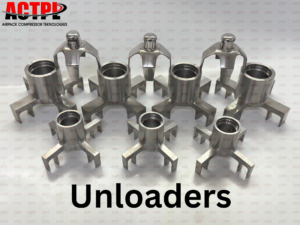
Unloader Valve
The valve controls airflow by opening and closing according to system pressure.
Its accuracy directly affects compressor performance.
-
Spring Assembly
The spring maintains the correct operating pressure.
Proper spring tension ensures accurate opening and closing cycles.
-
Piston
The piston converts pressure into mechanical movement.
It activates the unloading mechanism whenever pressure reaches the desired setting.
-
Valve Seat
The valve seat creates an airtight seal.
A damaged valve seat may result in leakage, pressure loss, and reduced efficiency.
-
O-Rings and Seals
High-quality seals prevent compressed air leakage and maintain pressure integrity.
Premium sealing materials improve durability under demanding industrial conditions.
-
Housing
The housing protects all internal components against dust, moisture, vibration, and mechanical damage.
Industrial-grade housings provide long service life even in harsh operating environments.
-
Control Mechanism
Depending on the compressor design, unloaders may use:
- Mechanical control
- Pneumatic control
- Hydraulic control
- Automatic pressure control
Types of Unloaders.
Different compressor systems require different unloading mechanisms.
Below are the most common types used in industrial reciprocating air compressors.
Mechanical Unloader
Mechanical unloaders operate using springs, levers, and mechanical linkages.
Advantages
- Simple construction
- Low maintenance
- Reliable performance
- Cost-effective
Best For
- Small industrial compressors
- Medium-duty applications
Pneumatic Unloader
These unloaders operate using compressed air pressure.
They automatically respond to changing system pressure.
Advantages
- Highly efficient
- Automatic operation
- Improved energy savings
- Fast pressure response
Best For
- Industrial air compressors
- Manufacturing plants
- Continuous-duty systems
Hydraulic Unloader
Hydraulic unloaders use hydraulic pressure for precise valve control.
Advantages
- Accurate pressure regulation
- High durability
- Suitable for heavy-duty operations
Best For
- High-pressure compressor systems
- Large industrial facilities
Automatic Pressure Unloader
Automatic unloaders continuously monitor system pressure.
They automatically load and unload the compressor according to air demand.
Advantages
- Energy efficient
- Reduced operator involvement
- Improved compressor life
- Lower operating costs
Benefits of Using a High-Quality Unloader.
A premium-grade unloader provides considerable operational benefits besides only regulating pressure.
Increases Energy Efficiency
A properly operating unloader prevents compressors from operating at an undue load.
As such, less electricity is used to power the compressor (thus lowering operational costs).
Extends Compressor Life
Reducing mechanical stress minimizes wear on:
- Pistons
- Valve assemblies
- Bearings
- Crankshaft
- Connecting rods
This extends overall compressor lifespan.
Smooth Motor Starting
Unloaders reduce startup torque.
Motors start easily without excessive current draw.
Reduces Downtime
Reliable unloaders reduce unexpected failures and maintenance interruptions.
This improves production efficiency.
Lowers Maintenance Costs
Because compressor components experience less stress, maintenance intervals become longer and repair costs decrease.
Improves Operational Safety
Pressure control minimizes sudden pressure spikes, protecting operators and equipment.
Consistent Air Delivery
Industrial processes require stable air pressure.
Unloaders help maintain consistent compressor performance even during varying load conditions.
Applications of Unloader
Unloaders are widely used in industrial environments where reciprocating air compressors operate continuously.
Common applications include:
- Industrial manufacturing plants
- Chemical processing units
- Oil and gas facilities
- Petrochemical industries
- Fertilizer plants
- Pharmaceutical manufacturing
- Steel manufacturing
- Cement plants
- Food processing industries
- Textile manufacturing
- Mining operations
- Power generation plants
- Automotive manufacturing
- Engineering workshops
- Air separation units
Their ability to improve efficiency and protect compressor components makes them an essential part of modern industrial compressed-air systems.
Industries That Use Unloaders.
A wide range of industries depend on unloaders to ensure reliable compressor performance.
- Oil & Gas
- Petrochemical Plants
- Refineries
- Chemical Industries
- Power Plants
- Fertilizer Plants
- Pharmaceutical Manufacturing
- Food & Beverage Processing
- Cement Industry
- Steel Plants
- Textile Industry
- Mining Operations
- Marine Industry
- Automotive Manufacturing
- General Engineering Industries
For these industries, a durable, precision-engineered unloader helps minimize downtime, improve energy efficiency, and maintain continuous production.
How to Choose the Right Unloader.
Selecting the right unloader is essential for maximizing compressor performance, minimizing downtime, and extending equipment life. An incorrect unloader can lead to pressure fluctuations, increased energy consumption, and premature wear of compressor components.
When selecting an unloader, there are several things to take into account:
-
Compressor Model
There are certain types of reciprocating air compressors for which unloader must be selected accordingly. Always pick an unloader which is compatible with your compressor.
-
Operating Pressure
The unloader should be capable of handling your system’s maximum operating pressure without affecting performance or safety.
-
Air Flow Capacity
Choose an unloader that supports the compressor’s air delivery (CFM) requirements. A mismatch can reduce efficiency and cause pressure instability.
-
Material Quality
Industrial environments often expose compressor parts to high temperatures, vibration, and corrosive gases. Select unloaders manufactured from premium-grade materials that offer excellent wear and corrosion resistance.
-
Compatibility
Ensure the unloader is compatible with your existing valve assembly, pressure control system, and compressor configuration.
-
Maintenance Requirements
A well-designed unloader should be easy to inspect, service, and replace. Readily available spare parts can significantly reduce maintenance time.
-
Manufacturer Reputation
Partner with an experienced compressor spare parts manufacturer that follows strict quality standards and provides reliable technical support.
Maintenance Tips for an Unloader.
Regular maintenance improves the efficiency and lifespan of your compressor unloader while reducing unexpected breakdowns.
Inspect Regularly
Check the unloader for signs of wear, air leakage, corrosion, or damaged components.
Clean Internal Components
Dust, oil, and carbon deposits can affect valve movement. Clean internal parts periodically according to the manufacturer’s recommendations.
Replace Worn Seals
O-rings, seals, and gaskets should be replaced immediately if signs of leakage appear.
Check Spring Tension
A weakened spring can cause improper loading and unloading cycles. Inspect spring performance during scheduled maintenance.
Monitor Operating Pressure
Unexpected pressure fluctuations often indicate an issue with the unloader system
Lubricate Moving Parts
Use the recommended lubricant where applicable to reduce friction and improve component life.
Schedule Preventive Maintenance
Routine preventive maintenance minimizes downtime and extends compressor reliability.
Why Quality Matters.
A high-quality unloader is an investment in long-term operational reliability.
Low-quality or poorly manufactured unloaders often result in:
- Frequent air leakage
- Higher energy consumption
- Inconsistent pressure control
- Increased maintenance costs
- Unexpected production downtime
- Shorter compressor life
In contrast, precision-engineered unloaders provide:
- Reliable pressure regulation
- Smooth compressor startup
- Reduced wear on internal components
- Lower operating costs
- Improved energy efficiency
- Longer service life
In industries that depend upon compressor uptime, quality reciprocating air compressor replacement parts provide improved productivity and decreased overall expenses.
Frequently Asked Questions (FAQs)
- What is the purpose of an unloader in a reciprocating air compressor?
An unloader releases trapped pressure during startup and regulates compressor loading and unloading, reducing motor load and improving efficiency.
- How does an unloader improve compressor efficiency?
It prevents unnecessary compression during low air demand, reducing energy consumption and extending compressor life.
- What are the signs of a faulty unloader?
Common signs include hard starting, pressure fluctuations, excessive power consumption, unusual compressor noise, and frequent shutdowns.
- Can an unloader reduce electricity costs?
Yes. By preventing unnecessary compressor loading, an efficient unloader helps reduce energy usage and operating expenses.
- How often should an unloader be inspected?
Industrial compressors should typically have the unloader inspected during scheduled preventive maintenance or according to the equipment manufacturer’s recommendations.
- Which industries commonly use unloaders?
Oil & gas, petrochemical, power generation, pharmaceutical, food processing, cement, mining, steel, textile, and manufacturing industries.
- Can a damaged unloader affect compressor performance?
Yes. A damaged unloader may cause pressure loss, motor overload, higher maintenance costs, and reduced compressor efficiency.
- What materials are used in industrial unloaders?
Unloaders are commonly manufactured using stainless steel, alloy steel, brass, hardened steel, and high-performance sealing materials.
- How do I choose the correct unloader?
Select an unloader based on compressor model, operating pressure, flow capacity, material quality, compatibility, and application requirements.
- Why choose Airpack Compressor unloaders?
Airpack Compressor manufactures precision-engineered reciprocating air compressor spare parts designed for durability, reliable performance, and demanding industrial applications.
Conclusion.
An unloader is crucial in ensuring that the efficiency of reciprocating air compressors is improved. An unloader improves the performance and efficiency of reciprocating air compressors through various means ranging from reduction of startup loads to reduction in energy use.
Regardless of whether your company belongs to oil and gas industry, petrochemicals industry, power generation, pharmaceutical industry, cement industry, or manufacturing industry, choosing an efficient unloader can improve the performance of your compressor while saving you maintenance costs.
Working with a reputable compressor parts manufacturer guarantees quality compressor spare parts.